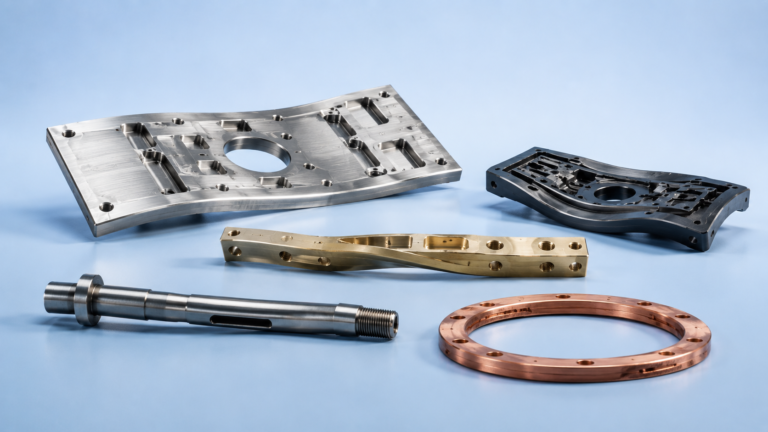
Silicon bronze is a copper-based alloy known for its warm reddish-brown appearance, strong corrosion resistance, good strength, and excellent workability. It is used in marine hardware, architectural components, fasteners, welding filler, electrical parts, hydraulic fittings, decorative items, and industrial equipment.
Unlike traditional bronze, which is usually associated with copper and tin, silicon bronze uses silicon as one of its main alloying elements. Small additions of elements such as manganese, zinc, iron, tin, or lead may also be present depending on the exact grade. These additions help improve strength, wear resistance, formability, weldability, and performance in demanding environments.
Because it combines durability with an attractive finish, silicon bronze is popular in both functional and decorative applications. It is especially useful where a part must resist moisture, outdoor exposure, saltwater, and general corrosion while still being easy to form, machine, braze, or weld.
What Is Silicon Bronze?
Silicon bronze is a family of copper alloys that contain silicon as a key alloying element. Copper normally makes up the majority of the alloy, while silicon is added in smaller amounts to improve strength, corrosion resistance, and mechanical performance.
In many common silicon bronze grades, copper content is roughly around 95% to 97%, with silicon usually making up a few percent of the total composition. Other elements may be included in controlled amounts to fine-tune the alloy for specific manufacturing processes or end-use applications.
The result is a bronze alloy that is stronger than many standard copper alloys, more corrosion resistant than plain copper in many environments, and easier to work with than some higher-strength metals.
Silicon bronze is also valued for its appearance. Its copper-rich base gives it a red-brown or golden-brown tone that can be polished, aged, or allowed to develop a patina over time. This makes it useful for visible components such as architectural hardware, sculptures, plaques, fittings, and decorative fasteners.
What Is Silicon Bronze Made Of?
Silicon bronze is primarily made from copper and silicon. Depending on the grade, it may also contain small amounts of manganese, zinc, iron, tin, lead, or other trace elements.
A typical silicon bronze composition may include:
| Element | Typical Role in the Alloy |
|---|---|
| Copper | Main base metal; provides corrosion resistance, conductivity, and color |
| Silicon | Improves strength, corrosion resistance, and weldability |
| Manganese | Helps improve strength and deoxidation during production |
| Zinc | May improve workability and modify mechanical behavior |
| Iron | Can improve strength in small controlled amounts |
| Tin | May improve wear resistance and corrosion performance |
| Lead | Sometimes added in very small quantities to improve machinability |
The exact composition depends on the alloy grade. For example, C65500 is commonly known as high-silicon bronze, while C65100 is known as low-silicon bronze. Both are copper-silicon alloys, but they differ in silicon content, mechanical properties, and preferred uses.
How Is Silicon Bronze Made?
Silicon bronze is produced by alloying copper with silicon and other selected elements under controlled conditions. The process must be carefully managed because small changes in composition can affect strength, hardness, weldability, corrosion resistance, and forming behavior.
A typical production process includes:
1. Raw Material Selection
The manufacturer begins with high-quality copper and selected alloying elements such as silicon, manganese, zinc, iron, or tin. The material recipe depends on the target grade and the required final properties.
2. Melting
The metals are melted in a furnace, often an induction or electric furnace. Temperature control is important to ensure that all elements dissolve properly and that the molten metal remains consistent.
3. Alloying
Silicon and other alloying elements are added in measured quantities. The molten metal is mixed to distribute the elements evenly throughout the batch.
4. Casting
The molten alloy is poured into molds, billets, bars, rods, plates, or other starting forms. The casting method depends on the intended product shape and downstream processing requirements.
5. Cooling and Solidification
The alloy is allowed to cool and solidify. Controlled cooling helps minimize defects and supports consistent material properties.
6. Forming or Machining
After casting, silicon bronze may be rolled, drawn, forged, extruded, machined, or fabricated into final components. Many silicon bronze grades are known for good hot and cold workability.
7. Finishing
Parts may be polished, brushed, aged, coated, patinated, or left unfinished depending on the desired appearance and corrosion behavior.
Key Characteristics of Silicon Bronze
Silicon bronze is selected because it offers a balanced combination of mechanical, chemical, and aesthetic qualities.
Important characteristics include:
- Excellent corrosion resistance
- Good strength compared with many copper alloys
- Attractive reddish-brown or golden-brown appearance
- Good weldability and brazing performance
- Good hot and cold forming behavior
- Resistance to wear and mechanical stress
- Moderate electrical conductivity
- Moderate thermal conductivity
- Non-sparking behavior in certain applications
- Non-magnetic properties
- Ability to develop a protective patina over time
These characteristics make silicon bronze useful in industries where both performance and appearance matter.
History of Silicon Bronze
Bronze has been used for thousands of years, dating back to the Bronze Age, when copper-based alloys replaced stone in tools, weapons, and decorative objects. Traditional bronze was usually made by combining copper with tin.
As metallurgy advanced, engineers and metalworkers began experimenting with other alloying elements to improve bronze for specific uses. Silicon became an important addition because it increased strength, helped improve corrosion resistance, and supported good casting and welding behavior.
Modern silicon bronze is now used in engineered components, marine fittings, electrical connectors, architectural hardware, welding rods, sculpture, and many other applications where durability and corrosion resistance are essential.
Other Names for Silicon Bronze
Silicon bronze may be referred to by several names depending on grade, standard, or trade usage. Common terms include:
- Copper-silicon alloy
- High-silicon bronze
- Low-silicon bronze
- C65500 bronze
- C65100 bronze
- UNS C65500
- UNS C65100
- Silicon bronze A
- Silicon bronze B
The UNS designation is often used in engineering, purchasing, and material specifications. C65500 and C65100 are among the better-known silicon bronze grades.
Common Types of Silicon Bronze
Silicon bronze is not a single material. It is a group of related copper-silicon alloys with different compositions and properties.
C65500 Silicon Bronze
C65500 is often called high-silicon bronze A. It is one of the most common and widely specified silicon bronze alloys.
It is known for:
- High strength
- Excellent corrosion resistance
- Good formability
- Good weldability
- Good hot and cold working properties
- Use in marine, industrial, architectural, and hardware applications
C65500 is commonly used for bolts, screws, nuts, rods, fasteners, marine hardware, valve components, shafting, welding applications, and decorative parts.
C65100 Silicon Bronze
C65100 is generally known as low-silicon bronze B. It has lower silicon content than C65500 and is often used where a balance of corrosion resistance, strength, electrical properties, and formability is needed.
It may be used for:
- Electrical connectors
- Bushings
- Bearings
- Fasteners
- Valves
- Hardware
- Fittings
- Rods and wire
C65100 is often appreciated for its weldability, brazing behavior, and corrosion resistance.
Physical Properties of Silicon Bronze
The physical properties of silicon bronze vary by grade and processing condition, but the alloy family is generally known for density, strength, conductivity, and resistance to corrosion.
Density
Silicon bronze has a density of around 8.5 g/cm³, depending on composition. This makes it heavier than aluminum but comparable to many copper-based alloys.
Strength
Silicon bronze is stronger than many common bronzes and brasses. Strength depends on grade, temper, cold working, and heat history.
Hardness
The hardness of silicon bronze is moderate. It is hard enough for fasteners, fittings, bushings, and wear-resistant components, but still workable enough for forming and fabrication.
Electrical Conductivity
Silicon bronze conducts electricity, although not as well as pure copper. This makes it suitable for some connectors and electrical hardware where corrosion resistance and strength are also needed.
Thermal Conductivity
Silicon bronze has useful thermal conductivity, making it suitable for some heat-transfer applications, although it is not as conductive as pure copper.
Magnetic Behavior
Silicon bronze is generally considered non-magnetic, making it useful in environments where magnetic interference should be minimized.
Appearance
Silicon bronze typically has a warm reddish-brown, coppery, or golden-brown tone. The final appearance depends on finish, oxidation, exposure conditions, and alloy composition.
Chemical Properties of Silicon Bronze
Silicon bronze performs well in many corrosive environments because of its copper-rich composition and silicon content. It does not rust like iron or carbon steel because it does not rely on iron as the primary metal.
Important chemical behaviors include:
| Chemical Property | Description |
|---|---|
| Base metal | Copper-rich alloy |
| Primary alloying element | Silicon |
| Oxidation behavior | Forms surface oxides and patina rather than red rust |
| Moisture resistance | Performs well in humid and wet environments |
| Saltwater resistance | Commonly used in marine settings |
| Acid resistance | Resists some non-oxidizing acids, depending on grade and exposure |
| Alkali resistance | Generally performs well in many alkaline environments |
| Patina formation | Can develop a greenish or brownish protective surface layer |
| Corrosion mode | More resistant to general corrosion than many ferrous metals |
Although silicon bronze is corrosion resistant, it is not immune to all chemicals. Strong oxidizing acids, certain sulfide environments, and aggressive industrial chemicals may attack some grades. Material selection should always consider the specific service environment.
What Color Is Silicon Bronze?
Silicon bronze usually has a reddish-brown, coppery-brown, or golden-brown color. The exact tone depends on the alloy composition, surface finish, polishing method, and age of the material.
Freshly machined or polished silicon bronze can appear bright and warm. Over time, it may darken or develop a patina. In outdoor or marine environments, the surface may gradually shift toward brown, green, or muted bronze tones.
This natural aging process is one reason silicon bronze is used in architectural and decorative applications. It can look refined when polished and attractive when aged.
What Does Silicon Bronze Look Like?
Silicon bronze may appear smooth, polished, brushed, cast, machined, or slightly textured depending on how it is made. In fasteners and hardware, it often has a clean metallic bronze finish. In sculpture and architecture, it may be intentionally patinated to create a darker or aged appearance.
Its visual appeal is one of its advantages over plain steel or many industrial alloys. Components made from silicon bronze can serve a structural purpose while also contributing to the design of a finished product.
Silicon Bronze vs Other Bronze Alloys
Silicon bronze differs from other bronze alloys mainly because silicon is a key alloying element. Other bronzes use different primary additions.
Silicon Bronze vs Phosphor Bronze
Phosphor bronze usually contains copper, tin, and phosphorus. It is known for fatigue resistance, spring properties, and electrical applications. Silicon bronze is typically preferred when corrosion resistance, welding, and marine or architectural use are more important.
Silicon Bronze vs Aluminum Bronze
Aluminum bronze contains aluminum as a major alloying element. It can offer very high strength and excellent wear resistance. It is often used in heavy-duty marine and industrial components. Silicon bronze is generally easier to work and is often chosen for fasteners, hardware, welding filler, and decorative applications.
Silicon Bronze vs Traditional Tin Bronze
Traditional bronze is usually copper and tin. Silicon bronze replaces or reduces the role of tin by using silicon to improve strength, corrosion resistance, and workability.
Silicon Bronze vs Brass
Silicon bronze and brass are both copper-based alloys, but they are not the same.
Brass is mainly copper and zinc. Silicon bronze is mainly copper with silicon as a key alloying element.
Main differences include:
| Feature | Silicon Bronze | Brass |
|---|---|---|
| Main alloying element | Silicon | Zinc |
| Typical color | Reddish-brown or bronze | Yellow, gold, or red-gold |
| Corrosion resistance | Excellent, especially in outdoor and marine use | Good, but varies by grade |
| Strength | Often higher than common brasses | Varies widely |
| Common uses | Marine hardware, fasteners, welding, architecture | Plumbing, fittings, instruments, decorative hardware |
| Patina behavior | Develops bronze/copper patina | Can tarnish or dezincify in some environments |
Silicon bronze is often selected over brass when strength, saltwater resistance, or long-term outdoor durability is more important.
Applications of Silicon Bronze
Silicon bronze is used in many industries because it resists corrosion, looks attractive, and performs well under mechanical stress.
1. Marine Hardware
Silicon bronze is widely used in marine environments because it resists saltwater corrosion better than many common metals. It is used for:
- Boat fasteners
- Propeller shafting
- Marine screws
- Nuts and bolts
- Clamps
- Hinges
- Deck hardware
- Fittings and brackets
Its corrosion resistance helps prevent premature failure in wet, salty, and outdoor environments.
2. Fasteners
Silicon bronze fasteners are common in woodworking, boatbuilding, restoration, outdoor construction, and architectural hardware. Screws, bolts, nuts, washers, nails, and rivets made from silicon bronze are valued because they remain durable and visually appealing.
They are especially useful where steel fasteners would rust or stain surrounding materials.
3. Architectural Hardware
Architects and builders use silicon bronze for visible hardware and design features. Common applications include:
- Door handles
- Hinges
- Railings
- Window hardware
- Decorative panels
- Sculptural details
- Exterior fixtures
- Custom metalwork
Its color and patina make it suitable for premium architectural finishes.
4. Welding Rods and Filler Metal
Silicon bronze welding rods are used for brazing, TIG welding, MIG welding, and joining copper alloys, brass, bronze, steel, and other compatible metals. Silicon bronze filler is popular because it flows well and creates attractive, corrosion-resistant joints.
It is often used in automotive restoration, metal art, sheet metal work, and repair applications.
5. Hydraulic Components
Silicon bronze may be used in hydraulic fittings, valves, connectors, and related parts. Its corrosion resistance and strength help it perform in systems exposed to fluids, moisture, and pressure.
6. Tubing and Pipe Components
Silicon bronze tubing and fittings can be used where durability, formability, and corrosion resistance are needed. It may be selected for water-handling systems, industrial fluid lines, or specialty tubing applications.
7. Electrical Components
Because silicon bronze offers moderate electrical conductivity combined with strength and corrosion resistance, it can be used in connectors, terminals, electrical hardware, and grounding-related components where pure copper may be too soft.
8. Bushings and Bearings
Some silicon bronze grades are used in bushings, bearing plates, and wear components. The alloy’s strength, corrosion resistance, and wear behavior make it useful in moving assemblies where durability matters.
9. Industrial Equipment
Industrial uses include chemical equipment, tanks, screens, wire cloth, heat exchanger parts, kettles, channels, rivets, and formed components. Its resistance to corrosion and ability to be fabricated into different shapes make it versatile.
10. Sculpture and Decorative Metalwork
Artists and metalworkers use silicon bronze for sculpture, castings, plaques, and decorative pieces. It offers good castability, an attractive finish, and the ability to develop rich patina effects.
Can Silicon Bronze Be Used With Aluminum?
Silicon bronze can be used with aluminum in some joining and fastening situations, but compatibility must be considered carefully. It may be used as a filler material in certain brazing or welding applications, and silicon bronze fasteners may be used with aluminum in some assemblies.
However, when different metals are used together, galvanic corrosion can become a concern, especially in wet or salty environments. Proper design, isolation washers, coatings, sealants, or protective finishes may be needed.
Does Silicon Bronze Rust?
Silicon bronze does not rust in the same way iron or steel rusts. Rust is iron oxide, and silicon bronze is a copper-based alloy rather than an iron-based metal.
Instead of forming red rust, silicon bronze may oxidize or develop a patina. This surface layer can help protect the metal underneath and is one reason the alloy performs well outdoors and in marine environments.
Does Silicon Bronze Turn Green?
Yes, silicon bronze can turn green over time, especially when exposed to moisture, air, salts, and outdoor conditions. This green surface layer is a form of patina associated with copper-based metals.
The patina is not the same as destructive red rust. In many cases, it acts as a protective layer and can be desirable for architectural, sculptural, or decorative purposes.
Is Silicon Bronze Strong?
Yes, silicon bronze is considered strong among copper-based alloys. Its strength depends on the specific grade and temper, but it is often chosen for demanding fastener, marine, architectural, and industrial applications.
It is not usually as strong as high-strength steels, so it may not be the best choice for every heavy structural application. However, where corrosion resistance, appearance, and workability matter, silicon bronze offers an excellent balance.
Is Silicon Bronze Malleable?
Silicon bronze is generally malleable and workable. Many grades can be formed, bent, drawn, forged, rolled, or machined depending on the condition of the material.
This makes it useful for parts that require shaping, such as fittings, hardware, tubing, rods, wire, fasteners, and decorative components.
Can Silicon Bronze Be Welded?
Yes, silicon bronze can be welded and brazed. In fact, good weldability is one of the reasons it is widely used as a filler material.
Silicon bronze filler is commonly used in TIG and MIG processes for joining sheet metal, copper alloys, brass, bronze, and some steel applications. It is also valued for producing visually clean joints with good corrosion resistance.
Advantages of Silicon Bronze
Silicon bronze offers many practical benefits.
Excellent Corrosion Resistance
It performs well in outdoor, wet, humid, and marine environments. This makes it a strong choice for boats, exterior hardware, and exposed fasteners.
Attractive Appearance
Its warm bronze color is suitable for visible parts, decorative hardware, sculpture, and architectural design.
Good Strength
Silicon bronze provides better strength than many softer copper alloys while maintaining good workability.
Good Workability
It can be formed, machined, brazed, welded, forged, and fabricated into many shapes.
Long Service Life
Its corrosion resistance and durability help parts last longer in harsh environments.
Non-Magnetic Behavior
Silicon bronze is useful where magnetic interference is undesirable.
Recyclability
Because it is copper-based, silicon bronze can often be recycled, supporting more efficient material use.
Disadvantages of Silicon Bronze
Despite its benefits, silicon bronze is not ideal for every application.
Higher Cost
Silicon bronze is usually more expensive than carbon steel and some common brasses. Cost may be a limiting factor for large-volume or low-budget projects.
Lower Strength Than Some Steels
Although strong for a copper alloy, it does not match the strength of many alloy steels or stainless steels.
Limited High-Temperature Performance
Silicon bronze may lose strength at elevated temperatures and should not be selected for extreme heat unless the grade is verified for the service conditions.
Chemical Limitations
It resists many corrosive environments but can be attacked by certain aggressive chemicals.
Galvanic Corrosion Risk
When used with dissimilar metals, especially in marine environments, galvanic corrosion must be considered.
Silicon Bronze FAQs
What is silicon bronze used for?
Silicon bronze is used for marine hardware, fasteners, architectural hardware, welding filler, hydraulic fittings, electrical connectors, bushings, bearings, tubing, sculpture, and industrial components.
Is silicon bronze better than brass?
It depends on the application. Silicon bronze is often better for marine, outdoor, high-strength, and corrosion-resistant applications. Brass may be better for lower-cost decorative parts, plumbing fittings, and applications where brass-specific properties are preferred.
Is silicon bronze waterproof?
Silicon bronze is not “waterproof” in the same way a coating is, but it has excellent resistance to water-related corrosion. It is commonly used in wet and marine environments.
Can silicon bronze be polished?
Yes. Silicon bronze can be polished to a bright warm finish. It can also be brushed, aged, or patinated.
Is silicon bronze magnetic?
Silicon bronze is generally non-magnetic.
Does silicon bronze contain lead?
Some grades may contain very small amounts of lead, while others are low-lead or lead-free depending on specification. Always check the exact alloy certificate or material standard.
What is C65500 silicon bronze?
C65500 is a high-silicon bronze alloy known for strength, corrosion resistance, formability, and weldability. It is commonly used in marine hardware, fasteners, rods, wire, and industrial components.
What is C65100 silicon bronze?
C65100 is a low-silicon bronze alloy often used where corrosion resistance, electrical properties, weldability, and moderate strength are required.
Can silicon bronze be machined?
Yes. Silicon bronze can be machined, although machinability depends on the specific grade and temper. It is typically less free-machining than leaded brass but workable with proper tooling.
Is silicon bronze good for saltwater?
Yes. Silicon bronze is widely used in saltwater and marine environments because it resists corrosion better than many common metals.
Summary
Silicon bronze is a copper-silicon alloy valued for corrosion resistance, strength, workability, weldability, and appearance. Its warm reddish-brown color makes it attractive for visible hardware and architectural details, while its durability makes it suitable for marine, industrial, hydraulic, electrical, and mechanical applications.
Common grades such as C65500 and C65100 provide different balances of strength, conductivity, formability, and corrosion resistance. C65500 is often selected for high-strength marine and hardware applications, while C65100 is useful where moderate strength, corrosion resistance, and electrical properties are important.
Although silicon bronze is more expensive than many basic metals and not as strong as high-strength steel, it remains an excellent choice where long-term corrosion resistance, attractive appearance, and reliable fabrication performance are required.