Rivets are among the most dependable permanent fastening solutions used across manufacturing, construction, aerospace, automotive, marine, and DIY industries. Their ability to create strong, vibration-resistant joints makes them an excellent choice when welding or threaded fasteners are not practical.
With numerous rivet styles, materials, and installation methods available, selecting the right one depends on factors such as load requirements, material thickness, environmental conditions, and accessibility during installation.
This guide explains the most common types of rivets, how they work, their advantages and disadvantages, and where each type performs best.
What Is a Rivet?
A rivet is a permanent mechanical fastener consisting of a smooth cylindrical shaft and a pre-formed head. During installation, the opposite end of the rivet is deformed using a rivet gun or hammer, creating a second head that securely clamps two or more materials together.
Unlike screws or bolts, rivets are not designed to be removed and reused. Removing one generally requires drilling it out.
Because of their reliability and resistance to vibration, rivets are commonly used in structural applications where long-term durability is essential.
How Does a Rivet Work?
The installation process is straightforward:
- Align the materials to be joined.
- Drill or prepare matching holes.
- Insert the rivet through the hole.
- Deform the tail using the appropriate installation tool.
- The newly formed head locks the materials together permanently.
This creates a secure mechanical joint capable of handling significant shear and tensile forces.
Main Parts of a Rivet
Although rivet designs vary, most include:
- Head – The factory-formed top that remains visible after installation.
- Shank (Body) – The cylindrical section passing through the joined materials.
- Tail – The end that expands during installation.
- Mandrel (blind rivets only) – A steel pin that expands the rivet body before breaking off.
Common Types of Rivets
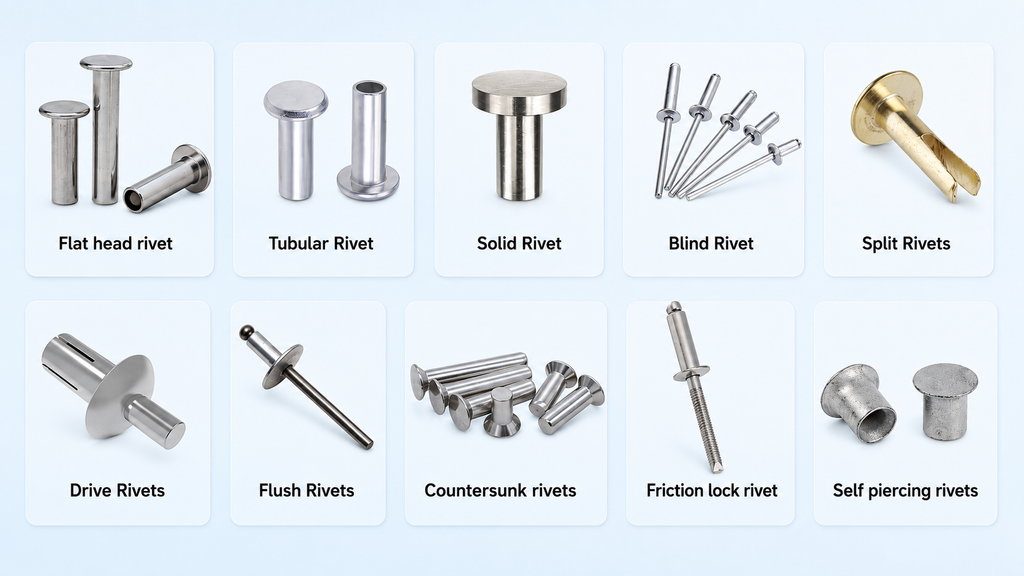
1. Blind Rivets (POP Rivets)
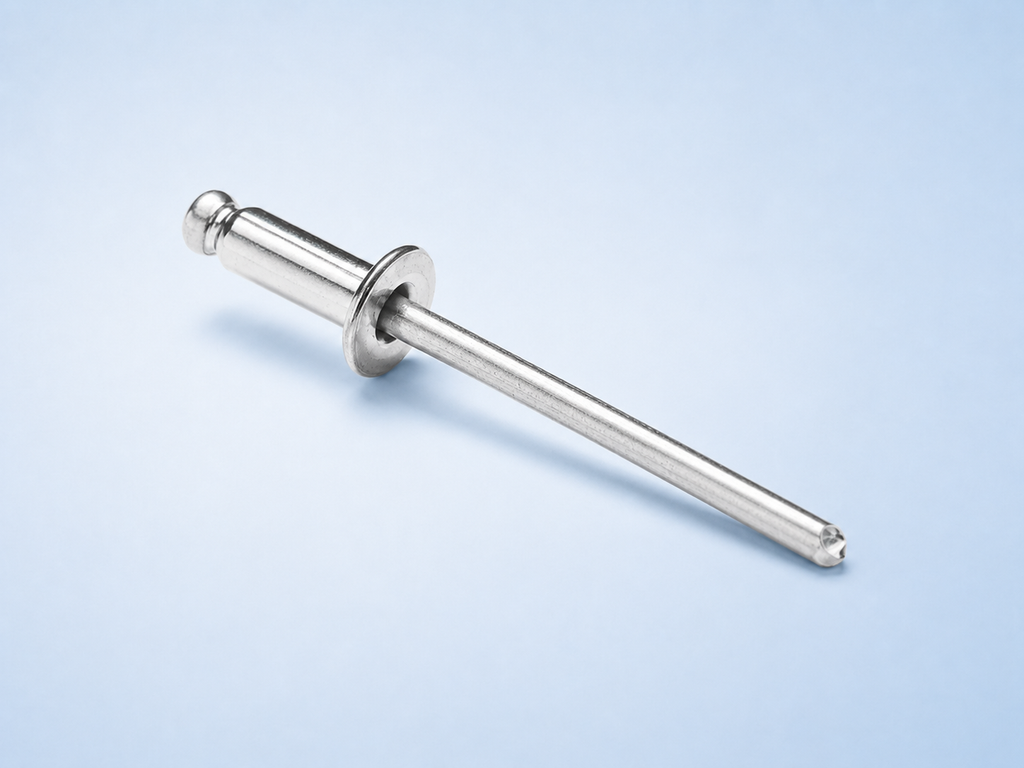
Blind rivets are among the most popular fastening solutions because they can be installed when only one side of the workpiece is accessible.
During installation, a rivet gun pulls the mandrel through the rivet body, causing it to expand before the mandrel snaps at a predetermined point.
Advantages
- Installation from one side only
- Quick and simple process
- Suitable for many materials
- Excellent for production work
- Cost-effective
Limitations
- Lower structural strength than solid rivets
- Mandrel remains inside the rivet body
- Not ideal for the highest load applications
Typical Applications
- HVAC systems
- Automotive panels
- Electrical enclosures
- Sheet metal fabrication
- Signage
- Furniture manufacturing
2. Solid Rivets
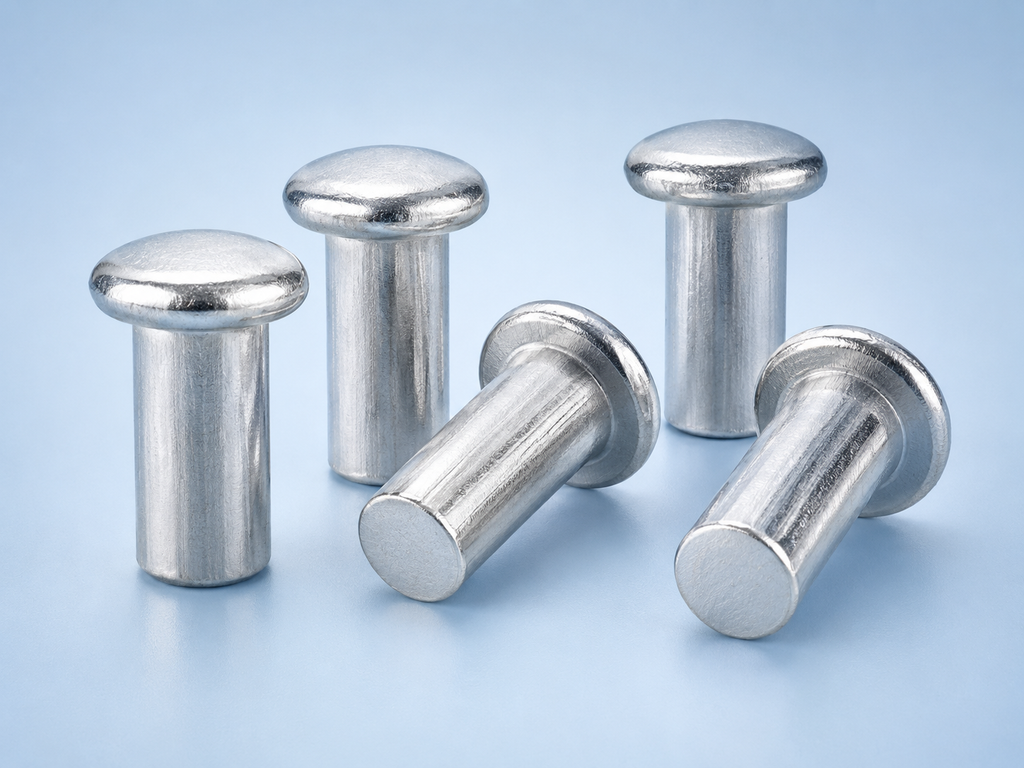
Solid rivets represent one of the oldest and strongest permanent fastening methods available.
Made from a single piece of metal, they require access to both sides of the assembly. Installation typically involves pneumatic riveting tools or bucking bars.
Advantages
- Exceptional strength
- Outstanding fatigue resistance
- Long service life
- High vibration resistance
Limitations
- Requires access to both sides
- More labor-intensive installation
- Specialized tools often required
Typical Applications
- Aircraft structures
- Bridges
- Heavy machinery
- Structural steel fabrication
- Shipbuilding
3. Semi-Tubular Rivets
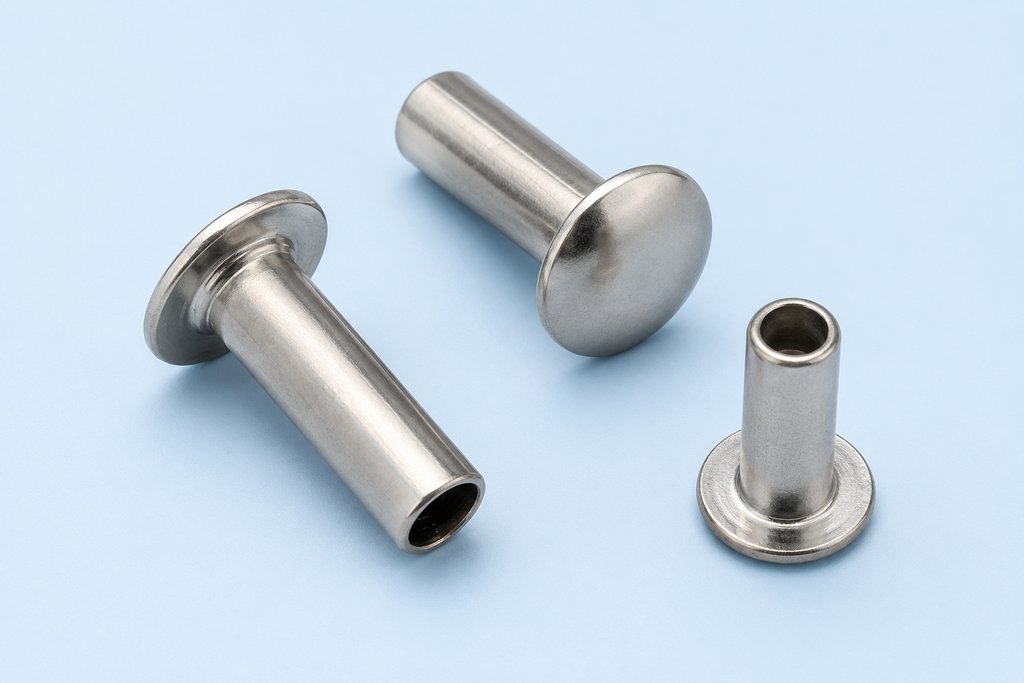
Semi-tubular rivets contain a partially hollow end that reduces the force needed during installation.
Because less material must be deformed, installation is faster while still producing a durable joint.
Advantages
- Faster installation
- Lower installation force
- Longer tool life
- Consistent results
Common Uses
- Hinges
- Brakes
- Locks
- Furniture
- Appliances
- Mechanical assemblies
4. Tubular Rivets
Tubular rivets feature a fully hollow body that allows easy deformation during installation.
They are often selected where moderate strength and high production speeds are priorities.
Advantages
- Easy installation
- Reduced material usage
- Lightweight
- Economical
Applications
- Leather goods
- Clothing accessories
- Electrical components
- Consumer products
- Packaging equipment
5. Drive Rivets
Drive rivets are installed by striking a central pin into the rivet body.
They provide quick fastening without requiring access to the rear side.
Advantages
- Fast installation
- Minimal tooling
- Good for decorative work
Applications
- Nameplates
- Identification tags
- Sign installation
- Decorative trim
6. Split Rivets
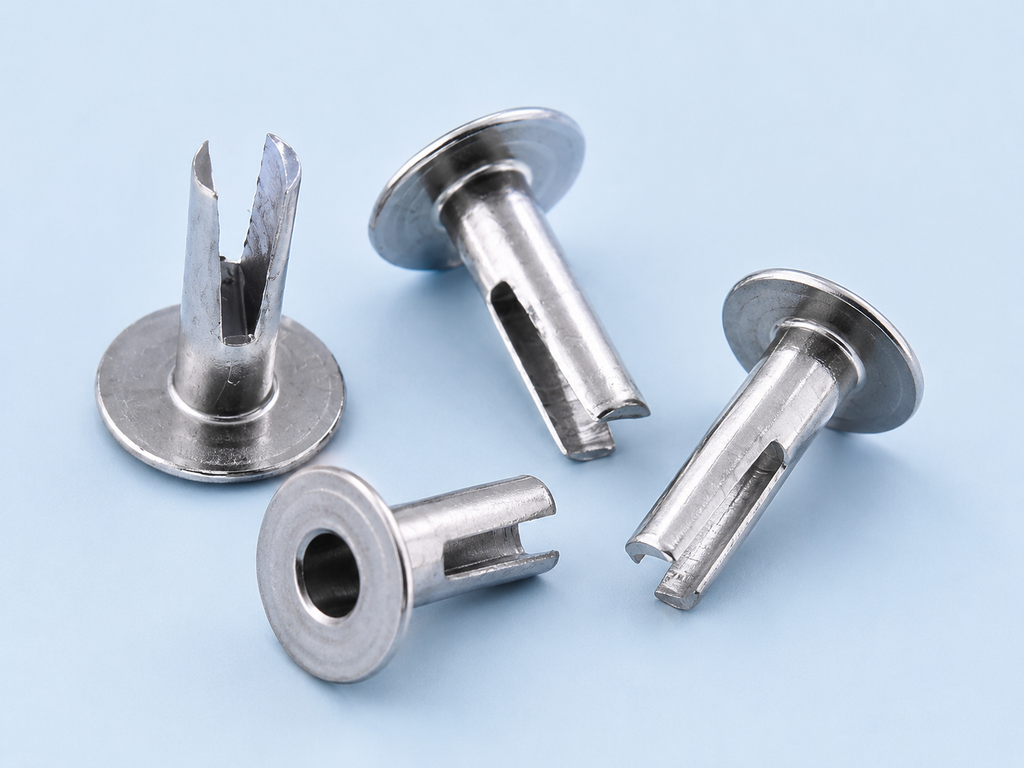
Split rivets have a divided shank that spreads apart during installation.
They work particularly well with softer materials that could be damaged by traditional rivets.
Advantages
- Excellent grip in soft materials
- Simple installation
- Low installation force
Applications
- Leather products
- Plastic components
- Wood assemblies
- Fabric products
7. Structural Blind Rivets
Structural blind rivets offer significantly greater strength than standard blind rivets.
Many designs mechanically lock the mandrel inside the rivet body, improving shear and tensile performance.
Advantages
- High strength
- Excellent vibration resistance
- Weather-resistant
- Suitable for structural applications
Common Applications
- Commercial vehicles
- Steel structures
- Rail transportation
- Construction
- Heavy equipment
Rivet Head Styles
Different head styles affect both appearance and performance.
Dome Head
The dome head is the most common style, offering an excellent balance between strength and ease of installation.
Best for:
- General engineering
- Metal fabrication
- Automotive work
Countersunk Head
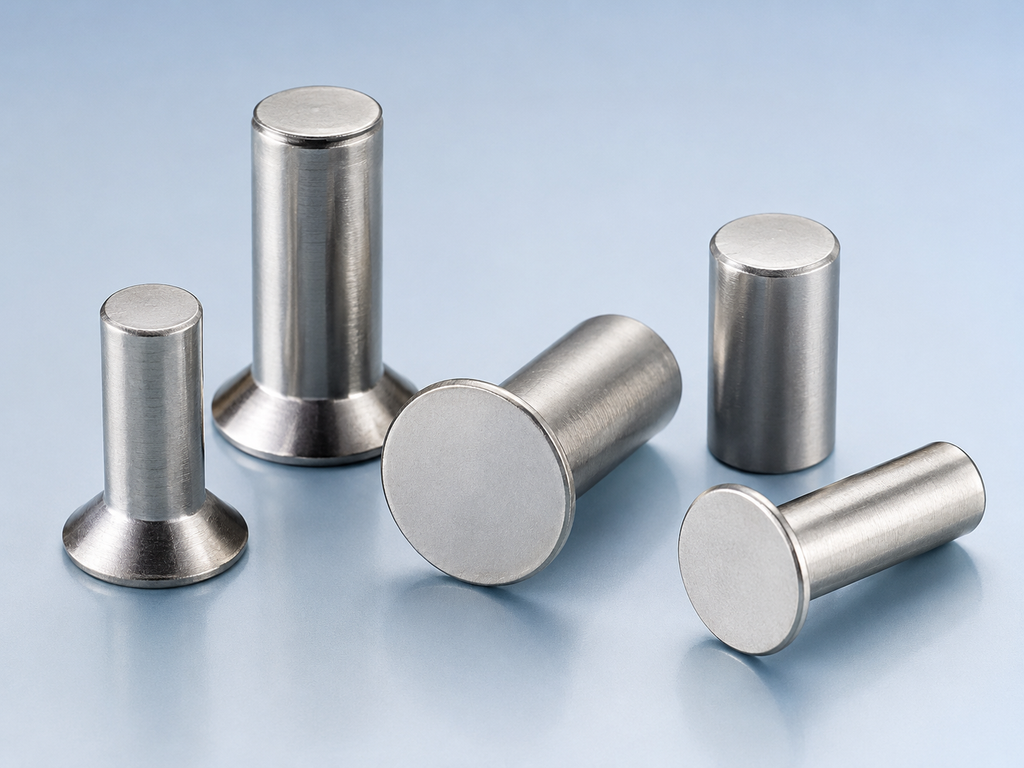
Countersunk rivets sit flush with the material surface after installation.
Best for:
- Aircraft skins
- Decorative panels
- Sliding surfaces
- Aerodynamic applications
Large Flange Head
Large flange rivets provide a wider bearing surface, reducing the risk of pull-through in softer materials.
Best for:
- Plastics
- Fiberglass
- Thin aluminum
- Composite materials
Universal Head
Universal heads combine many of the benefits of dome and rounded profiles, making them suitable for a wide range of industrial applications.
Rivet Materials
Choosing the correct material is just as important as selecting the right rivet type.
Aluminum Rivets
Advantages:
- Lightweight
- Corrosion-resistant
- Affordable
- Easy installation
Common uses:
- HVAC
- Automotive
- Electronics
- Lightweight fabrication
Steel Rivets
Advantages:
- High strength
- Durable
- Cost-effective
Applications:
- Construction
- Heavy machinery
- Structural fabrication
Stainless Steel Rivets
Advantages:
- Outstanding corrosion resistance
- Long service life
- High strength
Applications:
- Marine equipment
- Food processing
- Outdoor installations
- Chemical facilities
Copper Rivets
Advantages:
- Attractive appearance
- Excellent corrosion resistance
- Good electrical conductivity
Applications:
- Decorative projects
- Leatherworking
- Roofing
- Electrical assemblies
Brass Rivets
Advantages:
- Corrosion-resistant
- Decorative finish
- Non-magnetic
Applications:
- Furniture
- Marine hardware
- Musical instruments
- Interior fittings
Advantages of Rivets
Rivets remain popular because they offer several important benefits:
- Permanent and secure fastening
- Excellent vibration resistance
- Suitable for thin materials
- Reliable long-term performance
- Minimal maintenance
- Fast installation with the proper tools
- Available in many sizes and materials
- Effective for joining dissimilar materials
Potential Limitations
Although highly versatile, rivets are not ideal for every application.
Some limitations include:
- Permanent installation
- Removal requires drilling
- Limited adjustability after installation
- Incorrect installation may weaken the joint
- Some types require access to both sides
How to Choose the Right Rivet
When selecting a rivet, consider these key factors:
Material Compatibility
Choose a rivet material compatible with the workpieces to reduce the risk of galvanic corrosion.
Grip Range
The rivet must accommodate the combined thickness of all materials being joined.
Load Requirements
Evaluate expected shear and tensile loads to ensure the selected rivet provides adequate strength.
Environmental Conditions
Consider moisture, chemicals, temperature, and UV exposure when selecting materials.
Installation Access
If only one side of the assembly is accessible, blind rivets are generally the preferred solution.
Appearance
Visible installations may benefit from decorative head styles or corrosion-resistant finishes.
Common Rivet Applications
Rivets are used across numerous industries.
Construction
- Steel framing
- Roofing
- Curtain walls
- Structural assemblies
Automotive
- Body panels
- Interior trim
- Chassis components
- Heat shields
Aerospace
- Aircraft fuselages
- Wings
- Structural reinforcements
- Interior assemblies
Marine
- Boat hulls
- Deck fittings
- Aluminum structures
- Stainless steel fixtures
Manufacturing
- Machinery
- Equipment enclosures
- Sheet metal products
- Industrial cabinets
DIY and Home Improvement
- Furniture repair
- Metal fabrication
- Garden equipment
- Workshop projects
Rivets vs Screws vs Bolts
| Feature | Rivets | Screws | Bolts |
|---|---|---|---|
| Permanent | Yes | No | No |
| Vibration Resistance | Excellent | Moderate | High |
| Reusable | No | Yes | Yes |
| Maintenance | Minimal | Periodic | Periodic |
| Installation Speed | Fast | Moderate | Moderate |
| One-Sided Installation | Yes (Blind Rivets) | Yes | Usually No |
Frequently Asked Questions
What is the strongest type of rivet?
Solid rivets generally provide the highest strength and are widely used in aerospace, heavy construction, and structural engineering.
Can blind rivets replace solid rivets?
Blind rivets work well for many applications, especially when rear access is unavailable. However, solid rivets remain the preferred option for maximum structural performance.
Are stainless steel rivets better than aluminum rivets?
Stainless steel rivets offer greater strength and corrosion resistance, while aluminum rivets are lighter, easier to install, and often more economical.
Can rivets be removed?
Yes. Most rivets can be removed by drilling through the center of the rivet until the head separates from the body.
How do I know what rivet size I need?
Choose a rivet with a grip range that matches the total material thickness and a diameter suitable for the expected load requirements.
Final Thoughts
Rivets continue to be one of the most trusted permanent fastening solutions across countless industries. Whether you’re assembling lightweight sheet metal, constructing structural steel frameworks, or manufacturing precision equipment, selecting the appropriate rivet type improves joint strength, durability, and long-term reliability.
By understanding the differences between blind, solid, tubular, structural, and specialty rivets—as well as choosing the right material and head style—you can ensure every fastening application delivers dependable performance for years to come.