Sourcing custom iron and steel castings is not simply about finding a foundry capable of pouring molten metal. For industrial purchasing managers, the real challenge is finding a reliable supplier that can deliver fully machined castings, manufactured to the correct material specifications, dimensional tolerances, and delivery requirements.
Many industrial components require several manufacturing operations before they are ready for assembly. A cast gearbox housing, for example, may require pattern manufacturing, sand casting, heat treatment, CNC milling, precision boring, drilling, and final inspection.
Managing each operation through a different subcontractor increases coordination work, transportation costs, and the risk of production delays.
For European OEMs, sourcing finished machined castings through one manufacturing partner can simplify procurement and improve control over the complete production process.
This guide explains how to source custom iron and steel castings in Europe, compare manufacturing methods, evaluate suppliers, and prepare an RFQ that results in an accurate quotation.
What Are Finished Machined Castings?
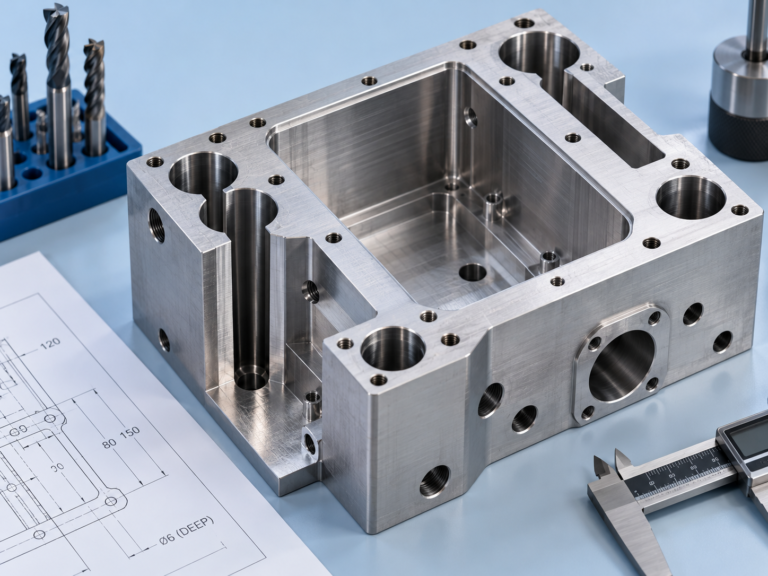
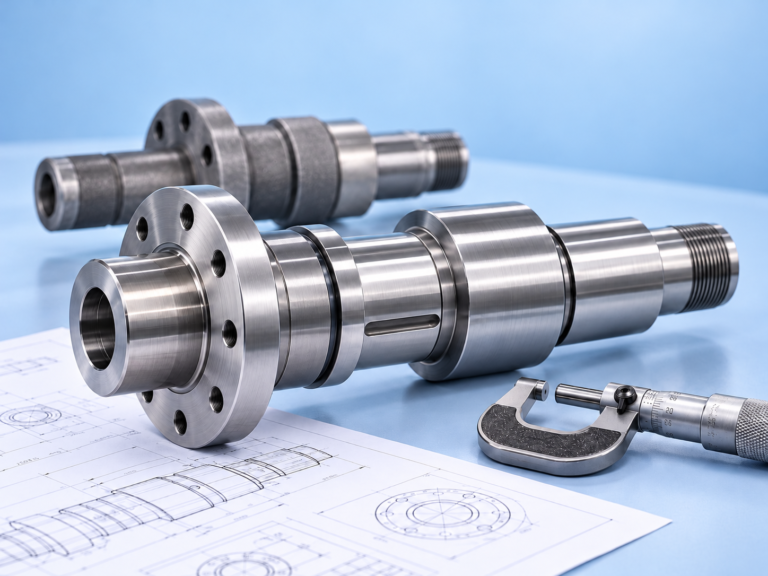
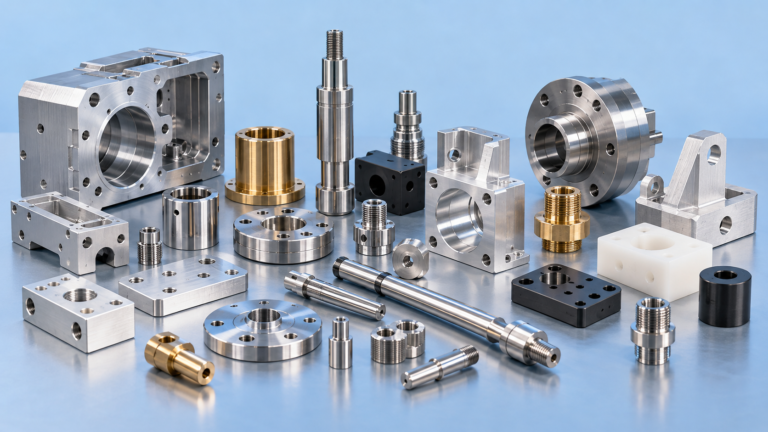
Finished machined castings are metal components produced through a casting process and subsequently machined to achieve the final dimensions, tolerances, and surface finishes required by an engineering drawing.
Casting creates the basic geometry of the component, while CNC machining provides precision where it is functionally necessary.
Common examples include:
- Gearbox housings and transmission casings.
- Industrial pump housings and covers.
- Bearing housings and bearing supports.
- Machinery frames and structural components.
- Valve bodies and flanges.
- Hydraulic equipment components.
- Agricultural and construction machinery parts.
- Custom industrial brackets and mounting components.
For example, a cast iron bearing housing may have an irregular external shape that does not require precision machining. However, its bearing seats, mounting surfaces, and bolt holes must meet specific dimensional requirements.
Instead of machining the entire component from a solid steel block, the part can be cast close to its final geometry and then machined only where needed.
This combination can reduce material waste, machining time, and overall manufacturing cost when the component design and production quantity justify casting tooling.
Need custom castings manufactured from your technical drawings?
MegaMETA coordinates metal casting services and precision CNC machining through qualified European production partners.
Request a Quotation for Finished Machined Castings
Cast Iron vs. Cast Steel: Which Material Should You Choose?
One of the first decisions when sourcing custom cast components is selecting the appropriate material.
Although cast iron and cast steel are both widely used in industrial manufacturing, their mechanical properties and typical applications differ significantly.
The correct choice depends on the operating environment, expected loads, wear requirements, component geometry, and manufacturing cost.
Grey Cast Iron — EN-GJL
Grey cast iron is commonly selected for components requiring good vibration damping, machinability, and dimensional stability.
Typical grades include:
- EN-GJL-200.
- EN-GJL-250.
- EN-GJL-300.
Common applications include machine tool bases, pump housings, gearbox casings, bearing supports, and industrial machinery frames.
Grey cast iron is often an economical choice for components primarily exposed to compressive loads and moderate mechanical stresses.
However, its relatively low ductility makes it less suitable for components exposed to significant impact loading or high tensile stresses.
Ductile Cast Iron — EN-GJS
Ductile iron, also known as nodular cast iron, offers greater ductility and typically better tensile strength than grey cast iron.
Common grades include:
- EN-GJS-400.
- EN-GJS-500.
- EN-GJS-700.
Ductile iron is frequently used for demanding mechanical components such as heavy-duty housings, agricultural machinery parts, hydraulic components, and structural castings.
It can provide an effective balance between mechanical performance, castability, and production cost.
Cast Steel
Cast steel is often selected where components require higher toughness, strength, weldability under appropriate procedures, or resistance to demanding mechanical loading.
Applications include heavy machinery components, structural parts, industrial equipment, and components operating under substantial mechanical stress.
Cast steel may require additional attention to heat treatment, shrinkage, casting defects, and subsequent CNC machining.
Cast Iron vs. Cast Steel Comparison
| Property | Grey Cast Iron | Ductile Cast Iron | Cast Steel |
|---|---|---|---|
| Vibration damping | Excellent | Good | Lower |
| Ductility | Low | Moderate to high | Generally high |
| Machinability | Generally good | Generally good | Grade-dependent |
| Impact resistance | Limited | Better than grey iron | Often good |
| Complex geometry | Suitable | Suitable | Suitable, with process considerations |
| Typical applications | Machine bases, housings | Heavy-duty housings, supports | Loaded structural and machinery components |
The material should always be selected according to the component’s design requirements rather than price alone.
When requesting quotations, purchasing teams should specify the exact material grade and applicable standard instead of simply writing “cast iron” or “cast steel.”
Sand Casting vs. Investment Casting: Which Process Is Better?
Choosing the correct casting process directly affects tooling cost, achievable geometry, machining allowances, surface quality, and production economics.
For industrial iron and steel components, two commonly considered methods are sand casting and investment casting.
Sand Casting
Sand casting is widely used for industrial components ranging from relatively small parts to large machinery castings.
It is particularly suitable for:
- Gearbox and pump housings.
- Machine bases.
- Large structural castings.
- Complex iron components.
- Low- and medium-volume production.
- Components requiring substantial subsequent machining.
Sand casting uses a pattern to form a mould cavity into which molten metal is poured.
Depending on the geometry, additional cores may be required to create internal passages, cavities, and other complex features.
Sand-cast components often require CNC machining to achieve accurate mounting faces, bearing bores, threaded holes, and other critical dimensions.
Investment Casting
Investment casting, sometimes called lost-wax casting, is commonly used to manufacture relatively small and geometrically complex components.
Typical advantages include:
- Good dimensional repeatability for suitable geometries.
- Complex external shapes.
- Finer as-cast surface finishes.
- Reduced machining allowances.
- Near-net-shape manufacturing.
Investment casting can be useful for stainless steel and alloy steel components where the geometry makes conventional machining expensive.
However, tooling cost, component dimensions, material selection, and annual quantity must be considered before selecting this process.
Manufacturing Process Comparison
| Requirement | Sand Casting | Investment Casting |
|---|---|---|
| Large industrial castings | Often suitable | Usually less suitable |
| Complex small components | Suitable with appropriate tooling | Particularly suitable |
| Initial tooling investment | Often lower | Often higher |
| As-cast surface finish | Relatively rough | Generally finer |
| Machining requirements | Frequently significant | Often reduced |
| Low-volume manufacturing | Often practical | Depends on tooling economics |
| Production of iron and steel components | Widely used | Suitable for selected alloys and geometries |
There is no universally cheaper casting method.
The best option depends on the drawing, quantity, material, tolerances, and expected repeat orders.
A supplier should evaluate these factors before recommending a casting process.
Why Combining Casting and CNC Machining Can Reduce Purchasing Costs
A common procurement challenge arises when companies purchase rough castings from one manufacturer and then send them to a separate CNC machining supplier.
Although this approach can work, it introduces additional responsibilities.
The buyer must coordinate production schedules, transportation, intermediate inspection, machining allowances, and quality claims between different manufacturers.
If a rough casting does not contain sufficient machining stock, the issue may not become visible until CNC machining begins.
This can lead to scrapped components, replacement production, and delayed deliveries.
Benefits of sourcing finished machined castings
1. Fewer suppliers to coordinate
A coordinated manufacturing solution reduces the number of separate purchase orders, logistics arrangements, and production schedules the purchasing department must manage.
2. Better control of machining allowances
Casting and machining requirements can be evaluated together before tooling production.
This is important for precision bores, machined faces, threaded connections, and mounting surfaces.
3. Reduced transportation and handling
Combining manufacturing stages within one coordinated supply chain can reduce unnecessary transport movements and intermediate handling.
4. Clearer quality responsibility
When one supplier manages the complete project, the buyer has a single contact for casting quality, machining accuracy, inspection, and delivery.
5. Easier repeat production
Once the casting tooling, machining programs, inspection requirements, and production documentation have been established, subsequent orders can follow an agreed manufacturing process.
For OEMs purchasing recurring batches, this can make production planning more predictable.
What Affects the Price of Custom Iron and Steel Castings?
The final price of a machined casting depends on more than the weight of the component.
Purchasing teams should consider the total manufacturing cost rather than comparing foundry prices alone.
The main cost factors include:
1. Pattern and Tooling Costs
Sand casting often requires a dedicated pattern, while complex geometries may also require cores and core boxes.
Tooling investment depends on the component’s size, complexity, dimensional requirements, and expected production volume.
For recurring orders, the initial tooling investment may be distributed across a larger number of parts.
Buyers should clarify who owns the tooling, where it will be stored, and whether it can be reused for future orders.
2. Material Grade
Different iron and steel grades require specific chemical compositions, melting procedures, and quality controls.
Special alloys or demanding mechanical properties may increase the cost of raw material, production, and inspection.
3. Component Geometry
Thin walls, complex internal cavities, significant wall-thickness transitions, and challenging feeding arrangements can make castings more difficult to manufacture.
Design changes may sometimes improve production reliability and reduce cost without compromising component functionality.
4. CNC Machining Requirements
Precision machining can represent a substantial portion of the final component cost.
Operations may include:
- CNC milling of mounting surfaces.
- CNC boring of bearing seats.
- Drilling and tapping.
- CNC turning of circular features.
- Grinding of precision surfaces.
- Multi-axis machining of complex geometries.
Unnecessarily tight tolerances can increase machining and inspection costs.
For this reason, engineering drawings should distinguish functionally critical dimensions from features where standard casting tolerances are acceptable.
5. Order Quantity and Annual Demand
The initial quantity and expected annual volume influence tooling economics, production planning, and machine setup costs.
A buyer ordering 20 components may receive a different unit price from a buyer ordering 200 or 1,000 identical components.
However, the relationship is not always linear. Production yield, moulding method, batch size, and machining complexity also affect pricing.
When requesting quotations, consider asking for multiple quantity options.
For example:
| Quotation quantity | Purpose |
|---|---|
| 10 pieces | Initial validation or pilot order |
| 50 pieces | Small production batch |
| 100 pieces | Regular production |
| 500 pieces | Larger repeat order |
These quantities are illustrative. Actual economical batch sizes depend on the process and part geometry.
Have a casting drawing and expected annual quantity?
Instead of requesting a rough price per kilogram, send MegaMETA your drawing and production requirements for an evaluation of the complete finished component.
Request a Custom Casting Quote
What Should Buyers Check Before Choosing a Casting Supplier in Europe?
Finding a foundry that can produce a casting is only the first step.
The more important question is whether the supplier can consistently deliver a component that meets your complete technical requirements.
Before selecting a supplier, consider the following factors.
Manufacturing Capabilities
Verify that the supplier can produce the specified material, component weight, geometry, and annual volume.
Not every foundry is suitable for every type of casting.
A manufacturer specializing in small investment castings may not be equipped to produce large ductile iron housings.
CNC Machining Capacity
If the component requires final machining, confirm whether the project includes all necessary operations.
Ask about:
- Maximum machinable dimensions.
- CNC turning and milling capabilities.
- Boring and grinding operations.
- Workholding for irregular cast components.
- Critical tolerance control.
- Inspection of machined features.
Material Certification
Industrial buyers may require certificates confirming the material’s chemical composition and mechanical properties.
For appropriate projects, EN 10204 3.1 inspection certificates can be specified in the purchase requirements.
Quality Inspection
Depending on the component’s function, inspection requirements may include:
- Dimensional inspection reports.
- Coordinate measuring machine (CMM) measurement.
- Hardness testing.
- Ultrasonic testing.
- Magnetic particle inspection.
- Radiographic testing.
- Pressure or leak testing.
Not every casting requires every inspection method.
The appropriate inspection plan should reflect the drawing, material specification, safety considerations, and operating conditions.
Production Lead Times
A new casting project may involve several stages:
- Technical evaluation and quotation.
- Pattern and tooling manufacturing.
- Initial casting samples.
- Sample inspection and approval.
- Serial casting production.
- CNC machining and finishing.
- Final quality inspection.
- Packing and transportation.
Lead times can vary considerably depending on the casting method, tooling complexity, material availability, machining workload, and production volume.
Purchasing managers should request a timeline covering the full process, not only the foundry’s casting operation.
How to Prepare an RFQ for Finished Machined Castings
A complete Request for Quotation helps suppliers evaluate the project accurately and reduces unnecessary clarification emails.
For custom cast components, the RFQ should include both technical and commercial information.
Casting RFQ Checklist
| Required information | What to provide |
|---|---|
| Technical drawing | PDF drawing with dimensions, tolerances and revision |
| 3D model | STEP or another usable CAD file |
| Material specification | Exact cast iron or cast steel grade |
| Component weight | Estimated or existing finished weight, if known |
| Order quantity | Initial production quantity |
| Annual demand | Expected repeat orders |
| Casting method | Required process, if specified |
| Machining requirements | Critical bores, faces, holes, threads and tolerances |
| Surface finish | Machined roughness and surface treatment |
| Heat treatment | Required condition and specification |
| Inspection | Dimensional reports, NDT and other tests |
| Certification | Material certificates and traceability requirements |
| Delivery | Required date and destination country |
| Tooling | Existing patterns or need for new tooling |
If an existing casting is being transferred from another manufacturer, include information about current tooling and any previously identified production problems.
Should You Provide a Casting Drawing or a Finished-Part Drawing?
Ideally, both drawings should be available when existing tooling is involved.
The casting drawing defines the rough component geometry, casting allowances, draft angles, and related production requirements.
The finished-part drawing defines the dimensions and tolerances that must be achieved after machining.
For new projects, a finished-part drawing and 3D model may be sufficient to begin a manufacturing review, with the casting design developed during the tooling stage.
This allows casting and machining requirements to be considered together before production starts.
Why European OEMs Source Custom Castings Through Lithuania
European purchasing departments often need to balance manufacturing cost, technical capability, communication, quality control, and delivery reliability.
Lithuania offers a useful location for coordinating manufacturing projects serving Northern and Western Europe.
For buyers in Sweden, Denmark, Finland, Norway, Germany, and the Netherlands, sourcing through Lithuania can support regional supply chain diversification.
Potential advantages include:
- Access to a broad network of European manufacturing capabilities.
- Coordination within the European market.
- Practical communication across different manufacturing stages.
- Flexible planning for prototypes and recurring production.
- Consolidation of casting, machining, and finishing requirements.
However, the most suitable supplier should be chosen on demonstrated capability, total delivered cost, and quality performance rather than geography alone.
A competitive casting quotation should consider tooling, production, machining, inspection, packaging, logistics, and potential rework costs.
Custom Iron and Steel Castings Through MegaMETA
MegaMETA supports European OEM manufacturers and industrial purchasing departments in sourcing custom cast metal components.
Through our network of European production partners, we coordinate casting projects based on customer drawings, technical specifications, and production requirements.
Our capabilities include:
Custom Casting Services
- Grey iron castings.
- Ductile iron castings.
- Cast steel components.
- Sand casting.
- Investment casting.
- Pattern and tooling development.
- Prototype and serial production projects.
Secondary CNC Machining
Depending on the component requirements, manufacturing can include:
- CNC milling.
- CNC turning.
- Precision boring.
- Drilling and tapping.
- Grinding.
- Machining of critical mounting surfaces.
- Dimensional inspection.
Quality and Project Coordination
MegaMETA can coordinate the manufacturing sequence from technical review and tooling development through casting, machining, inspection, and delivery.
Available project documentation can include material certificates, dimensional reports, and additional inspection records according to agreed requirements.
This approach is particularly relevant for purchasing departments that want to source fully finished components without separately managing a foundry and machining subcontractor.
Learn more about our casting services and CNC machining capabilities.
Frequently Asked Questions About Custom Machined Castings
Can I order fully machined cast iron components instead of rough castings?
Yes. Casting production can be combined with CNC milling, turning, boring, drilling, grinding, and inspection to supply components according to the finished-part drawing.
The required manufacturing stages should be defined during quotation.
Is cast iron cheaper than machining a part from solid steel?
It can be, particularly for complex geometries and recurring production volumes where casting reduces material removal.
However, tooling, batch size, material requirements, and finishing operations must be considered before determining the most economical method.
What is the minimum order quantity for custom castings?
Minimum quantities vary by casting process, part size, material, and tooling requirements.
Some sand casting projects are feasible in small batches, while other manufacturing methods become more economical at higher volumes.
Can a casting supplier manufacture parts from my STEP file?
A STEP model is useful for initial evaluation, but a complete quotation normally also requires material, dimensional tolerances, quantities, and inspection specifications.
A 2D technical drawing is especially important when critical dimensions or geometric tolerances must be controlled.
Can I order both rough castings and finished machined castings?
Yes. Buyers can specify whether they require rough castings, partially machined components, or fully finished parts ready for assembly.
What documentation can be supplied with castings?
Depending on agreed requirements, documentation may include material certificates, dimensional inspection reports, hardness results, and non-destructive testing records.
These requirements should be stated in the RFQ.
Request a Quotation for Custom Iron and Steel Castings in Europe
Whether you need a small batch of ductile iron housings, recurring orders of cast steel machinery components, or complex castings requiring precision CNC machining, selecting the correct manufacturing approach is essential.
MegaMETA helps European industrial buyers coordinate casting and subsequent machining through a network of qualified manufacturing partners.
Send us your technical drawings, required material, order quantity, and delivery requirements.
Our team can review your project, evaluate suitable manufacturing processes, and prepare a quotation covering the agreed production scope.
Request a Quote — Custom Iron and Steel Castings
Email: contact@megameta.lt
MegaMETA — Custom Metal Components and Manufacturing Solutions for European OEMs.