What Is 4140 Alloy Steel?
4140 alloy steel is a medium-carbon, low-alloy steel known for its high strength, toughness, wear resistance, and excellent response to heat treatment. It is part of the chromium-molybdenum steel family, often called chromoly steel, because chromium and molybdenum are the main alloying elements that improve its performance.
This grade is commonly identified as AISI 4140 steel or SAE 4140 steel. It contains approximately 0.38–0.43% carbon, along with chromium, molybdenum, manganese, silicon, and iron as the base element. The combination gives the steel a strong balance of hardness, fatigue resistance, impact resistance, and machinability.
4140 alloy steel is widely used in automotive, aerospace, industrial machinery, tooling, oil and gas, construction, and manufacturing applications. It is especially useful for parts that must carry heavy loads, resist wear, and perform reliably under high mechanical stress.
4140 Alloy Steel Overview
4140 alloy steel is selected when ordinary carbon steel does not provide enough strength, hardenability, or durability. It is stronger and more wear-resistant than many plain carbon steels, while still being more affordable and widely available than many highly specialised alloy steels.
The material can be supplied in several conditions, including annealed, normalized, quenched and tempered, pre-hardened, hot-rolled, forged, cold-finished, and machined forms. This flexibility makes it suitable for many manufacturing routes, from CNC machining and forging to heavy-duty fabrication.
Key characteristics of 4140 alloy steel include:
- Medium-carbon, low-alloy steel
- Chromium-molybdenum composition
- High tensile strength
- Good toughness and impact resistance
- Good wear and abrasion resistance
- Heat treatable
- Good hardenability
- Ferromagnetic behaviour
- Moderate corrosion resistance only with protection
- Suitable for shafts, gears, crankshafts, fasteners, tooling, and structural parts
4140 alloy steel is not stainless steel. Although chromium is present, the chromium level is far below the amount needed for stainless-level corrosion resistance. Because of this, 4140 can rust if exposed to moisture or corrosive environments without coating, plating, oiling, painting, or another protective finish.
How Is 4140 Alloy Steel Different From Carbon Steel?
4140 alloy steel differs from plain carbon steel because it contains alloying elements such as chromium and molybdenum. These elements improve properties that ordinary carbon steel does not provide as effectively.
Carbon steel is mainly made from iron and carbon, with limited additional alloying elements. Its performance depends largely on carbon content. Low-carbon steel is easier to weld and form, while higher-carbon steel is harder and stronger but less ductile.
4140 alloy steel offers better:
- Hardenability
- Wear resistance
- Fatigue resistance
- High-stress performance
- Strength after heat treatment
- Toughness under demanding service conditions
This makes 4140 more suitable for heavy-duty parts such as shafts, gears, crankshafts, bolts, spindles, tooling components, and hydraulic parts.
What Is 4140 Alloy Steel Used For?
4140 alloy steel is used for parts that need strength, toughness, fatigue resistance, and wear resistance. It performs well in applications involving rotational loads, impact, friction, pressure, and repeated stress.
Common applications of 4140 alloy steel include:
| Application Area | Example Uses |
|---|---|
| Automotive | Axles, shafts, crankshafts, gears, connecting rods, suspension parts |
| Aerospace | Structural parts, landing gear components, fasteners, high-load fittings |
| Industrial machinery | Spindles, couplings, rollers, machine components, wear parts |
| Tooling | Mold bases, die holders, bolster plates, fixtures, jigs |
| Oil and gas | Drill collars, couplings, pressure components, heavy-duty shafts |
| Construction | Structural pins, bolts, support components, heavy-duty plates |
| Power transmission | Gears, splines, crankshafts, drive shafts |
| Manufacturing | CNC machined parts, forged parts, pre-hardened components |
4140 is frequently chosen when mild steel is too soft or weak, but when the part does not require the higher toughness of nickel alloy steels such as 4340.
How Is 4140 Alloy Steel Produced?
4140 alloy steel is produced by melting iron with carefully controlled amounts of carbon, chromium, molybdenum, manganese, silicon, and other trace elements. The process begins with melting raw materials in a furnace, followed by alloying, refining, casting, and shaping.
After the molten steel reaches the required chemistry, it may be cast into ingots, billets, blooms, or slabs. These semi-finished forms are then processed into useful shapes.
Common processing methods include:
- Hot rolling
- Forging
- Cold finishing
- Annealing
- Normalizing
- Quenching and tempering
- CNC machining
- Grinding
- Surface finishing
Heat treatment is especially important for 4140 alloy steel because its final mechanical properties depend strongly on how it is hardened and tempered.
Chemical Composition of 4140 Alloy Steel
The performance of 4140 alloy steel comes from its balanced composition. Carbon increases hardness and strength. Chromium improves hardenability and wear resistance. Molybdenum improves strength retention, hardenability, and performance under elevated temperatures. Manganese supports toughness and helps refine the steel structure.
Typical chemical composition of 4140 alloy steel
| Element | Typical Content |
|---|---|
| Iron | Balance |
| Carbon | 0.38–0.43% |
| Manganese | 0.75–1.00% |
| Chromium | 0.90–1.20% |
| Molybdenum | 0.15–0.25% |
| Silicon | 0.15–0.35% |
| Phosphorus | Up to 0.035% |
| Sulfur | Up to 0.040% |
These values may vary slightly depending on the applicable standard, supplier specification, and product form.
Carbon Content of 4140 Alloy Steel
4140 alloy steel typically contains 0.38–0.43% carbon. This places it in the medium-carbon steel category.
The carbon content is important because it affects:
- Hardness
- Tensile strength
- Weldability
- Ductility
- Heat treatment response
- Machinability
- Wear resistance
Compared with low-carbon steels, 4140 can reach higher hardness and strength after heat treatment. Compared with higher-carbon steels, it offers a better balance between strength, toughness, and workability.
Mechanical Properties of 4140 Alloy Steel
4140 alloy steel is valued for its mechanical strength and toughness. Actual values depend heavily on heat treatment condition, section size, product form, and supplier specification.
Typical mechanical properties
| Property | Typical Value |
|---|---|
| Density | 7.85 g/cm³ |
| Modulus of elasticity | Around 200 GPa |
| Tensile strength | Around 95,000 psi annealed; over 150,000 psi heat treated |
| Yield strength | Around 60,000 psi annealed; over 140,000 psi quenched and tempered |
| Hardness | Typically 25–50 HRC when tempered |
| Magnetism | Ferromagnetic |
| Thermal conductivity | Around 42–45 W/m·K |
Because 4140 can be supplied in many conditions, designers should always confirm the required hardness, tensile strength, yield strength, and heat treatment condition before ordering.
Is 4140 Alloy Steel Magnetic?
Yes. 4140 alloy steel is magnetic because it is an iron-based ferrous alloy. Its ferromagnetic behaviour can be relevant for magnetic inspection, fixtures, sensors, motors, and material sorting.
This magnetic property does not indicate corrosion resistance or stainless behaviour. 4140 remains a low-alloy steel and needs protection in corrosive environments.
Is 4140 Alloy Steel Stainless Steel?
No. 4140 alloy steel is not stainless steel.
Although it contains chromium, the chromium content is usually around 0.90–1.20%, which is not enough to form the passive corrosion-resistant layer associated with stainless steels. Stainless steels generally require much higher chromium content.
This means 4140 steel can rust when exposed to:
- Water
- Humidity
- Salt
- Outdoor conditions
- Acids or chemicals
- Industrial environments
Common protection methods include black oxide, zinc plating, chrome plating, phosphate coating, powder coating, paint, oil, grease, and corrosion-inhibiting packaging.
Corrosion Resistance of 4140 Alloy Steel
4140 alloy steel has limited corrosion resistance. It performs better than some plain carbon steels in certain conditions, but it should not be treated as a corrosion-resistant alloy.
For dry indoor environments, 4140 may perform well with basic oiling or surface protection. For outdoor, marine, chemical, or humid environments, a protective coating is usually required.
Common ways to improve corrosion resistance:
- Zinc plating
- Nickel plating
- Chrome plating
- Black oxide
- Phosphate coating
- Paint or powder coating
- Oil coating
- Protective storage and packaging
If corrosion resistance is the main design requirement, stainless steel, aluminium, titanium, or coated alloy steel may be more appropriate.
Machinability of 4140 Alloy Steel
4140 alloy steel has good machinability in the annealed condition and more challenging machinability after hardening. Hardness level, heat treatment, tooling, coolant, and cutting parameters all influence machining performance.
Annealed 4140 is generally easier to machine because it has a softer microstructure. Pre-hardened or quenched-and-tempered 4140 is stronger and more wear-resistant, but it requires more robust tools and slower cutting parameters.
Machining tips for 4140 alloy steel:
- Machine in the annealed condition when possible
- Use carbide or coated carbide tooling for harder conditions
- Maintain rigid workholding
- Use coolant to control heat
- Avoid excessive tool wear
- Adjust speeds and feeds based on hardness
- Use grinding or finishing operations for tight tolerances
- Confirm whether the material is annealed, normalized, or pre-hardened before machining
4140 is commonly used for CNC turning, CNC milling, drilling, threading, grinding, and precision machining.
Heat Treatment of 4140 Alloy Steel
Heat treatment is one of the main reasons 4140 alloy steel is so widely used. Its chromium and molybdenum content allow it to harden more effectively than many plain carbon steels.
Common heat treatment processes include:
Annealing
Annealing softens the material, reduces internal stress, improves ductility, and makes the steel easier to machine or form.
Normalizing
Normalizing refines the grain structure and improves mechanical consistency.
Quenching
Quenching rapidly cools the steel after heating, forming a hard martensitic structure.
Tempering
Tempering reduces brittleness after quenching and improves toughness while adjusting hardness to the required level.
Pre-hardening
Pre-hardened and tempered 4140 is commonly supplied at around 28–32 HRC, giving manufacturers a ready-to-machine material with good strength and no need for final heat treatment in many applications.
Because heat treatment has a major impact on final performance, 4140 components should be processed using controlled procedures, especially for high-stress or safety-critical applications.
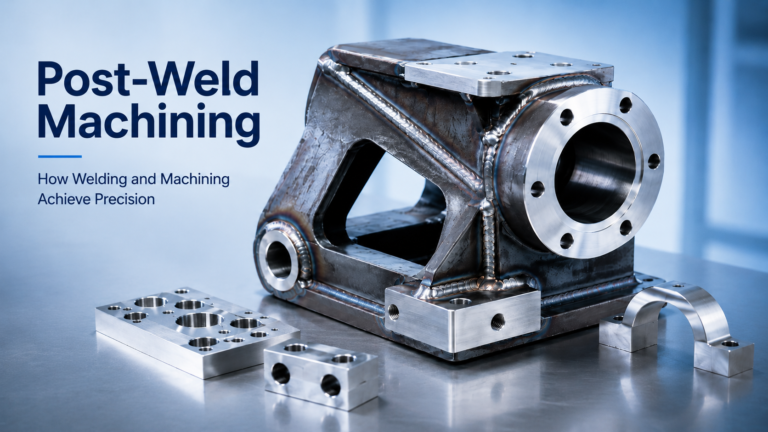
Welding 4140 Alloy Steel
4140 alloy steel can be welded, but it requires more care than mild steel. The medium carbon content and alloying elements increase the risk of cracking if the weld area cools too quickly or if hydrogen is present.
Preheating is commonly recommended to reduce thermal shock and cracking risk. Post-weld heat treatment may also be needed to relieve stress and restore toughness in the heat-affected zone.
Welding considerations for 4140 steel:
- Preheating may be required
- Hydrogen control is important
- Use suitable filler metal
- Avoid rapid cooling
- Post-weld heat treatment may be needed
- Keep the heat-affected zone under control
- Use a qualified welding procedure for critical parts
For high-strength components, welding should be planned carefully with the final mechanical requirements in mind.
Common Forms of 4140 Alloy Steel
4140 alloy steel is available in many forms, which makes it suitable for machining, forging, fabrication, and heavy-duty production.
1. 4140 Steel Bars and Rods
Bars and rods are among the most common forms of 4140 steel. They are used for shafts, bolts, pins, couplings, spindles, rollers, gears, and machined parts.
Bars may be round, square, flat, rectangular, or hexagonal, depending on the required component.
2. 4140 Steel Plates and Sheets
Plates and sheets are used for machine bases, tooling plates, frames, structural components, and heavy-duty flat parts. Plate is typically chosen where rigidity, thickness, and strength are needed.
4140 plate can be machined, drilled, ground, cut, and heat treated depending on the application.
3. 4140 Seamless Mechanical Tubing
Seamless 4140 tubing is used where strength, toughness, and pressure resistance matter. It is common in hydraulic systems, automotive components, mechanical structures, and high-load tubular parts.
Its strength-to-weight ratio makes it useful where solid bar would be too heavy.
4. 4140 Forgings
Forged 4140 steel is used for high-reliability parts such as gears, crankshafts, connecting rods, shafts, and heavy-duty mechanical components.
Forging improves grain flow and can increase fatigue resistance, impact strength, and overall toughness when done correctly.
5. Billets and Blooms
Billets and blooms are semi-finished forms used as starting stock for rolling, forging, or machining. They are useful for large or custom components where standard bars and plates are not suitable.
6. Pre-Hardened and Tempered 4140
Pre-hardened 4140 is supplied already heat treated, commonly around 28–32 HRC. This can reduce production time because the material may be machined and used without additional hardening.
It is popular for tooling, mold bases, shafts, and machinery parts where moderate hardness and good toughness are needed.
7. Custom Shapes and Profiles
4140 alloy steel can also be supplied as custom profiles, forgings, rings, blocks, and near-net shapes. These forms are used when standard stock sizes would create too much waste or require excessive machining.
Equivalent Grades of 4140 Alloy Steel
Different countries and standards use different names for steels similar to 4140. These equivalent grades are generally comparable, but they may not be identical in chemical limits, mechanical properties, or certification requirements.
Common equivalent grades of 4140 alloy steel
| Region / Standard | Equivalent Grade |
|---|---|
| USA | AISI 4140 / SAE 4140 |
| Europe | 42CrMo4 |
| Germany | 42CrMo4 / 1.7225 |
| Japan | SCM440 |
| United Kingdom | EN19 / 708M40 |
| France | 42CD4 |
| China | 42CrMo |
| Italy | 42CrMo4 |
| Sweden | 2244 |
When sourcing internationally, confirm the exact specification, heat treatment condition, hardness range, test certificate, and intended application before substituting one grade for another.
Advantages of 4140 Alloy Steel
4140 alloy steel is widely used because it offers a strong balance of performance, availability, and cost.
Main advantages include:
High strength
4140 provides excellent tensile and yield strength, especially after heat treatment.
Good toughness
It can absorb impact and shock loads better than many harder, more brittle steels.
Wear resistance
Heat-treated 4140 performs well in parts exposed to friction, abrasion, and sliding contact.
Heat treatability
Its mechanical properties can be adjusted through annealing, quenching, tempering, and pre-hardening.
Good hardenability
Chromium and molybdenum help the steel harden more uniformly than plain carbon steel.
Wide availability
4140 is commonly available in bars, plates, tubing, forgings, billets, and pre-hardened stock.
Good machinability in the right condition
Annealed 4140 is suitable for CNC machining and precision manufacturing.
Disadvantages of 4140 Alloy Steel
4140 is strong and versatile, but it has limitations.
Main disadvantages include:
Limited corrosion resistance
4140 can rust unless protected with coating, plating, oil, paint, or another finish.
More expensive than plain carbon steel
Its alloying elements and heat treatment requirements make it costlier than mild steel.
Welding requires care
Improper welding can cause cracking, brittleness, and reduced toughness.
Machining becomes harder after heat treatment
Pre-hardened or quenched-and-tempered 4140 requires stronger tooling and more controlled machining.
Not lightweight
Like most steels, 4140 is much heavier than aluminium or titanium.
Performance depends on heat treatment
Poor heat treatment can leave the material too soft, too brittle, or inconsistent.
4140 Alloy Steel vs 4130 Steel
4140 and 4130 are both chromium-molybdenum alloy steels. The main difference is carbon content. 4140 contains more carbon, giving it higher hardness and strength potential, while 4130 is generally easier to weld and more common in tubing applications.
| Feature | 4140 Alloy Steel | 4130 Steel |
|---|---|---|
| Carbon content | Around 0.40% | Around 0.30% |
| Strength | Higher | Lower to moderate |
| Weldability | More demanding | Better |
| Hardness potential | Higher | Lower |
| Common uses | Shafts, gears, crankshafts, tooling | Tubing, frames, aircraft structures |
| Heat treatment response | Strong | Good |
Choose 4140 when higher strength and hardness are needed. Choose 4130 when weldability, tubing, and strength-to-weight balance are more important.
4140 Alloy Steel vs 4340 Alloy Steel
4140 and 4340 are both high-performance low-alloy steels, but 4340 contains nickel in addition to chromium and molybdenum. This gives 4340 higher toughness and fatigue resistance in demanding applications.
| Feature | 4140 Alloy Steel | 4340 Alloy Steel |
|---|---|---|
| Alloy type | Chromium-molybdenum steel | Nickel-chromium-molybdenum steel |
| Nickel content | Minimal | Significant |
| Strength | High | Very high |
| Toughness | Good | Higher |
| Cost | Lower | Higher |
| Common uses | Shafts, gears, tooling, fasteners | Landing gear, high-stress shafts, aerospace parts |
Choose 4140 for strong, durable, cost-effective components. Choose 4340 when maximum toughness and fatigue resistance are required.
4140 Alloy Steel vs Aluminium
4140 alloy steel is much stronger and harder than many aluminium alloys, but it is also much heavier. Aluminium offers better corrosion resistance and a much lower density, making it useful when weight reduction matters.
| Feature | 4140 Alloy Steel | Aluminium |
|---|---|---|
| Density | High | Low |
| Strength | High | Moderate to high, grade-dependent |
| Wear resistance | Good | Lower |
| Corrosion resistance | Low without coating | Good |
| Machinability | Good, condition-dependent | Usually good |
| Common uses | Shafts, gears, tooling, machinery | Lightweight frames, panels, housings |
Choose 4140 for high-load, wear-resistant parts. Choose aluminium where low weight and corrosion resistance are more important.
4140 Alloy Steel vs Titanium
Titanium offers an excellent strength-to-weight ratio and much better corrosion resistance than 4140 steel. However, titanium is more expensive and more difficult to machine.
4140 alloy steel is usually preferred when absolute strength, wear resistance, cost efficiency, and availability are more important than weight reduction.
| Feature | 4140 Alloy Steel | Titanium |
|---|---|---|
| Strength | High | High |
| Weight | Heavy | Much lighter |
| Corrosion resistance | Low without coating | Excellent |
| Machinability | Easier than titanium | More difficult |
| Cost | Lower | Higher |
| Common uses | Heavy-duty machinery, gears, shafts | Aerospace, medical, marine, high-performance parts |
Choose titanium for lightweight, corrosion-resistant, premium applications. Choose 4140 for durable, high-load industrial parts where cost and wear resistance matter.
When Should You Choose 4140 Alloy Steel?
4140 alloy steel is a good choice when a component needs to be strong, tough, wear-resistant, and heat treatable.
Choose 4140 alloy steel when you need:
- High strength
- Good toughness
- Wear resistance
- Heat treatment capability
- Better hardenability than plain carbon steel
- A material for shafts, gears, crankshafts, or fasteners
- CNC machinability in annealed or pre-hardened condition
- A cost-effective alternative to higher-alloy steels
- A material available in bars, plates, tubes, forgings, and pre-hardened stock
It may not be the best option if the application requires excellent corrosion resistance, low weight, easy welding, or stainless-level environmental durability.
Summary
4140 alloy steel is a medium-carbon chromium-molybdenum steel known for high strength, toughness, hardenability, and wear resistance. It is commonly used for shafts, gears, crankshafts, bolts, spindles, tooling components, hydraulic parts, forged components, and heavy-duty machinery parts.
Its typical composition includes approximately 0.38–0.43% carbon, 0.90–1.20% chromium, 0.75–1.00% manganese, and 0.15–0.25% molybdenum. These alloying elements allow 4140 to perform better than many plain carbon steels in demanding mechanical applications.
For engineers, buyers, manufacturers, and designers, 4140 alloy steel is a practical material choice when strength, toughness, wear resistance, and heat treatment response are more important than corrosion resistance or low weight.