For European purchasing managers looking to reduce manufacturing costs, diversify their supplier base, or find reliable subcontract manufacturing capacity, Lithuania deserves serious consideration.
Located in the Baltic region and operating within the European Union, Lithuania offers access to CNC machining, metal fabrication, precision engineering, casting, welding, and other industrial manufacturing services.
For OEM manufacturers in Germany, Sweden, Denmark, Finland, Norway, the Netherlands, and other European markets, Lithuania can provide an attractive combination of manufacturing capabilities, competitive commercial conditions, and access to European supply chains.
However, finding the right manufacturing supplier in Lithuania requires more than comparing hourly machining rates or requesting the lowest unit price.
Purchasing managers need to evaluate manufacturing capabilities, quality control, realistic production lead times, material availability, logistics, and the supplier’s ability to support recurring orders.
The objective is not simply to find a cheaper manufacturer. It is to establish a reliable, technically capable, and commercially sustainable supply chain.
This guide explains what European purchasing managers should know about manufacturing in Lithuania, which processes can be sourced, how to evaluate Lithuanian subcontractors, and how to prepare an effective request for quotation (RFQ).
Looking for a manufacturing supplier in Lithuania?
MegaMETA supports European OEMs with CNC machining, sheet metal fabrication, metal casting, and coordinated subcontract manufacturing.
Send your technical drawings, quantities, material specifications, and requested delivery dates to evaluate a suitable production solution.
Request a Manufacturing Quote from Lithuania
1. Why Are European Companies Considering Manufacturing in Lithuania?
European industrial purchasing departments are under continuous pressure to balance price, quality, delivery reliability, and supply chain resilience.
At the same time, many manufacturers are reviewing their sourcing strategies because of rising operating costs, limited supplier capacity, unpredictable lead times, and the risks associated with depending on only one manufacturing partner.
For certain industrial components, Lithuania can provide an alternative to existing suppliers in Western Europe or more distant manufacturing markets.
Competitive Manufacturing Costs
Manufacturing costs vary substantially across Europe.
Labour expenses, facility operating costs, energy consumption, equipment utilisation, and production efficiency all influence the final cost of manufactured components.
Lithuanian manufacturers may offer competitive quotations compared with suppliers operating in higher-cost regions.
However, the actual price difference depends on several factors:
- Component complexity.
- Material grade and availability.
- Batch size.
- Machine setup requirements.
- Required tolerances.
- Surface finishing.
- Inspection documentation.
- Transport arrangements.
For example, a precision CNC-machined steel housing may require several machining operations, specialised fixtures, and dimensional inspections.
Even if the hourly machining rate is lower, an inefficient manufacturing process can eliminate the expected cost advantage.
Purchasing managers should compare the total delivered cost per accepted component rather than relying exclusively on hourly machine rates.
Access to the European Union Market
Lithuania has been a member of the European Union since 2004 and uses the euro as its currency.
For EU-based purchasing departments, this creates a familiar commercial environment for industrial sourcing.
Goods in free circulation can generally move between Lithuania and other EU member states without ordinary import customs procedures between those countries.
However, buyers must still account for applicable VAT treatment, transport documentation, contractual requirements, and any product-specific compliance obligations.
For manufacturers in Germany, Sweden, Denmark, Finland, and the Netherlands, sourcing within the EU can simplify aspects of procurement administration compared with sourcing from outside the European Union.
For Norwegian and UK buyers, import customs formalities and related requirements still need to be considered.
Geographic Position for European Deliveries
Lithuania’s location in Northern Europe provides road freight connections with Poland, Germany, the Baltic countries, and onward European markets.
This can support recurring shipments of manufactured components, including palletised CNC parts, sheet metal assemblies, and industrial equipment components.
For purchasing managers, the practical advantage is not simply geographic distance.
It is the ability to establish a predictable logistics process with agreed dispatch schedules, suitable packaging, and clear delivery responsibilities.
Transport lead times should always be confirmed for the actual destination and shipment requirements.
Diversification of the Supplier Base
Another reason to consider manufacturing in Lithuania is the opportunity to reduce dependence on an existing supplier.
A purchasing department may already have a capable CNC manufacturer in Germany or Sweden but need additional production capacity.
Alternatively, an existing supplier may be experiencing:
- Repeated delivery delays.
- Increasing manufacturing prices.
- Limited machine availability.
- Difficulties supporting small batches.
- Insufficient capacity for new projects.
Qualifying a Lithuanian manufacturing supplier can create a secondary source of production capacity without immediately replacing the existing manufacturer.
This approach is particularly valuable for repeat-order components and critical parts that can disrupt final assembly if deliveries fail.
2. What Manufacturing Services Can You Source in Lithuania?
Lithuania’s industrial supply base includes companies specialising in machining, metal fabrication, welding, casting, assembly, and related processes.
The exact capabilities vary significantly between suppliers, and not every company can perform every operation internally.
For European purchasing managers, the most relevant services depend on the components being sourced.
CNC Machining in Lithuania
CNC machining is one of the manufacturing services that European OEMs can consider sourcing from Lithuania.
Typical requirements include precision components manufactured through CNC milling, CNC turning, drilling, boring, and grinding.
Examples of components include:
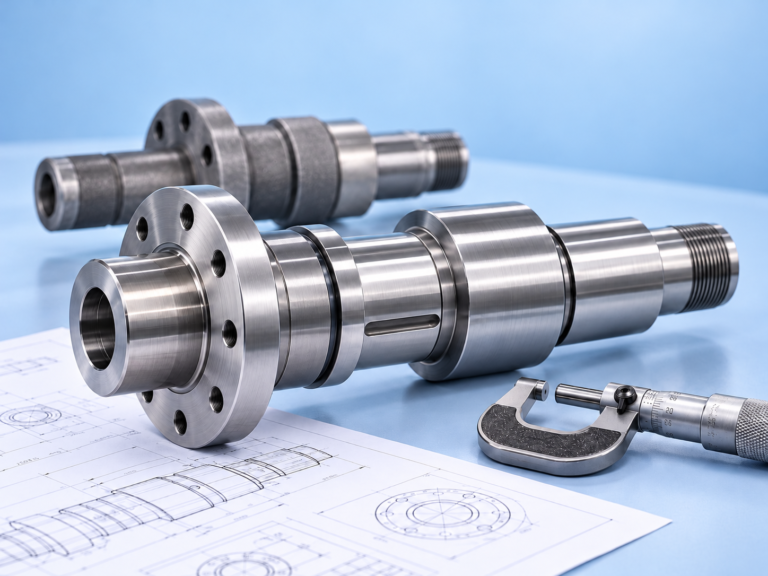
- Precision shafts and axles.
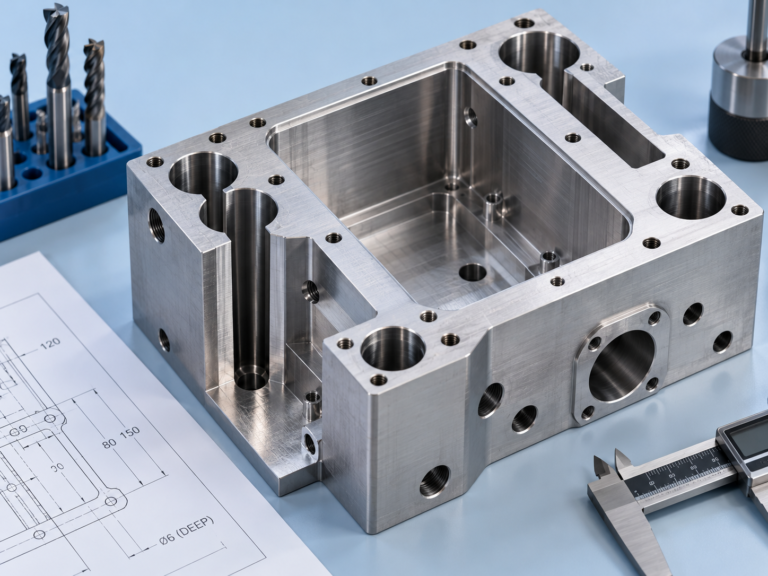
- Steel and aluminium housings.
- Bushings and spacers.
- Mounting brackets.
- Flanges and mechanical adapters.
- Hydraulic system components.
- Machine frames and structural elements.
- Precision parts for industrial equipment.
The most important factor is whether the supplier has access to the correct machinery and can meet the drawing requirements.
A small three-axis milling machine may be suitable for simple aluminium brackets but not for large, complex steel housings.
Likewise, a workshop specialising in large CNC turning may not be the most competitive option for small precision components.
MegaMETA provides CNC milling and turning services in Lithuania through a qualified manufacturing partner network.
Available capabilities include three-, four-, and five-axis CNC milling, CNC turning, and precision grinding, subject to project-specific feasibility.
For purchasing managers: Always submit technical drawings and expected order volumes when requesting a machining quotation. This allows the supplier to evaluate equipment suitability, material requirements, and realistic production costs.
Sheet Metal Fabrication and Laser Cutting
Sheet metal fabrication is another important manufacturing category.
Industrial projects may require laser-cut profiles, bent sheet metal parts, welded frames, or complete fabricated assemblies.
Common applications include:
- Electrical equipment enclosures.
- Industrial machine guards.
- Brackets and mounting systems.
- Stainless steel equipment components.
- Steel frames.
- Cabinets and structural assemblies.
- Protective covers.
- Custom industrial panels.
The cost of sheet metal components is influenced by material thickness, cutting length, nesting efficiency, bending complexity, tooling requirements, and secondary operations.
For complex components, purchasing managers should consider whether several manufacturing steps can be coordinated by one supplier.
MegaMETA offers sheet metal fabrication services covering precision bending, welding, and post-bending machining through its production network.
Welding and Fabricated Assemblies
Many industrial components cannot be manufactured economically through CNC machining alone.
Welded assemblies often combine laser-cut plates, bent components, machined features, and structural profiles.
Typical projects include industrial frames, welded machine bases, supports, equipment structures, and mechanical assemblies.
When selecting a welding supplier in Lithuania, purchasing managers should evaluate:
- Welding processes, including MIG, MAG, and TIG.
- Material compatibility.
- Welder qualifications where required.
- Dimensional control after welding.
- Distortion management.
- Applicable weld quality standards.
- Inspection and documentation requirements.
For assemblies containing precision-machined interfaces, it may be necessary to complete final machining after welding.
This helps achieve the critical dimensional relationships specified in the technical drawings.
MegaMETA can coordinate welding and related operations as part of its industrial fabrication services.
Metal Casting and Forging
Some metal components are more economical to manufacture from castings or forgings than from solid bar stock.
Casting can be especially relevant for components with complex geometries, internal cavities, or relatively large volumes of material.
Examples include:
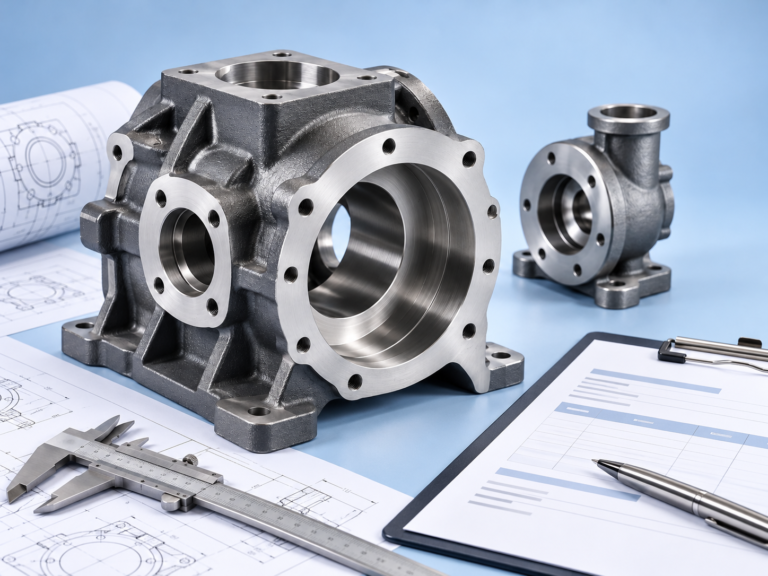
- Pump housings.
- Gearbox housings.
- Machine bases.
- Valve bodies.
- Industrial equipment casings.
- Structural cast components.
Forging, meanwhile, can be appropriate for parts requiring specific mechanical properties, favourable grain flow, and high structural strength.
Examples may include shafts, connecting elements, heavy-duty mechanical components, and other highly loaded parts.
The choice between casting, forging, and machining from solid material depends on the design, material, mechanical requirements, order volume, and tooling costs.
MegaMETA coordinates metal casting services through a European foundry network, including casting production and subsequent CNC machining where required.
For parts requiring forging, purchasing managers should provide the relevant material grade, drawing, expected quantities, and any mechanical testing requirements so that the manufacturing route can be evaluated.
Gear Manufacturing and Secondary Operations
European OEMs may also require specialised components such as spur gears, helical gears, bevel gears, splined shafts, and transmission elements.
These applications can require dedicated gear manufacturing equipment, heat treatment, grinding, and dimensional inspection.
When requesting a quotation, buyers should include gear-specific requirements such as module, number of teeth, pressure angle, material, heat treatment, and applicable accuracy grade.
Additional processes such as anodising, zinc plating, powder coating, heat treatment, and grinding may also be required for machined or fabricated parts.
Coordinating these operations through a single manufacturing partner can reduce the amount of supplier management required by the purchasing department.
MegaMETA’s manufacturing services include access to gear manufacturing and secondary processing options through its partner network.
3. Is Manufacturing in Lithuania Actually Cheaper?
For many purchasing managers, cost is one of the first reasons to investigate a new manufacturing location.
However, the answer depends on the component being manufactured.
Lithuania should not automatically be considered cheaper for every product, material, or batch size.
Understand the Main Cost Drivers
The price of a CNC-machined or fabricated component generally includes several cost elements.
| Cost element | How it affects the quotation |
|---|---|
| Raw material | Material grade, dimensions, availability, and waste |
| Machine time | Required operations and cycle times |
| Setup costs | Programming, tooling, and fixtures |
| Batch quantity | Distribution of setup costs across the order |
| Tolerances | Inspection and precision requirements |
| Surface finishing | External processes and additional handling |
| Quality documentation | Inspection reports and certification requirements |
| Packaging and transport | Protection, destination, and delivery frequency |
Two quotations can differ substantially even when both suppliers receive the same technical drawing.
The difference may result from manufacturing strategy rather than the country’s labour costs.
Example: Comparing Manufacturing Quotations
Consider a hypothetical European OEM that requires 2,000 precision-machined steel components annually.
| Cost factor | Existing supplier | Alternative supplier |
|---|---|---|
| Unit machining price | €58 | €49 |
| Annual quantity | 2,000 | 2,000 |
| Annual component cost | €116,000 | €98,000 |
| Annual transport and packaging | €1,000 | €3,000 |
| Estimated annual purchasing cost | €117,000 | €101,000 |
In this illustrative example, the alternative supplier offers estimated annual savings of €16,000.
However, this comparison assumes equivalent component quality, accepted quantities, production requirements, and commercial terms. It excludes one-time qualification and transfer costs.
The figures are not market quotations or evidence of typical Lithuania-versus-Western-Europe price differences.
Before selecting the new supplier, the purchasing department should also consider:
- Trial production costs.
- Tooling transfers.
- Quality approval.
- Delivery reliability.
- Inventory requirements.
- Payment terms.
- Potential disruption costs.
The goal should be to achieve the lowest sustainable total cost, not simply the lowest quoted unit price.
When Lithuania May Be Particularly Competitive
Manufacturing in Lithuania may be commercially attractive for projects involving:
- Repeat-order machined components.
- Small- and medium-batch production.
- Steel and aluminium parts.
- Multiple machining operations.
- Components requiring additional finishing processes.
- Manufacturing projects involving several subcontractors.
Nevertheless, the best option must be established through actual quotations against a consistent technical specification.
Want to compare your current manufacturing costs with an alternative production solution in Lithuania?
Send MegaMETA your existing drawings and annual volume requirements for a project-specific quotation.
Compare Manufacturing Costs — Request an RFQ
4. How to Evaluate a Manufacturing Supplier in Lithuania
Selecting a manufacturing supplier should involve more than reviewing a website or comparing prices.
Purchasing managers should use a structured qualification process to verify whether the supplier can reliably meet their requirements.
Verify Manufacturing Capabilities
The first step is to confirm that the supplier can manufacture the specific components you need.
Ask about:
- Available machining or fabrication processes.
- Maximum workpiece dimensions.
- Supported materials.
- Production batch sizes.
- Dimensional tolerances.
- Inspection capabilities.
- Secondary operations.
- Available production capacity.
Do not assume that every CNC company has five-axis machining capabilities or can process large-diameter components.
Likewise, do not assume that a welding company can handle complex machined assemblies without additional manufacturing partners.
Assess Quality Management
A reliable industrial supplier should have documented procedures for managing manufacturing quality.
ISO 9001 certification can be an important qualification criterion, particularly for companies with formal supplier approval procedures.
However, certification alone does not guarantee that a supplier can manufacture every component to the required tolerances.
Purchasing managers should also evaluate how the supplier manages:
- Incoming material inspection.
- In-process dimensional checks.
- Final inspection.
- Calibration of measuring equipment.
- Material traceability.
- Nonconforming components.
- Corrective actions.
- Drawing revision control.
For technically demanding projects, buyers may request sample inspection reports or first-article inspection documentation.
The inspection plan should match the component’s actual technical and functional requirements.
Review Material Traceability
Material traceability is particularly important for critical mechanical components.
Depending on the application, buyers may require EN 10204 3.1 material certificates, heat numbers, chemical composition, or mechanical property documentation.
These requirements should be included in the quotation request before production begins.
For example, if a shaft requires 42CrMo4+QT material, the supplier must understand that the specified material condition is part of the technical requirement.
Substituting a different material without approval could create serious quality and performance risks.
Evaluate Delivery Reliability
Low prices are not useful if components consistently arrive after their required delivery dates.
Ask potential suppliers how they plan production and communicate delays.
Useful questions include:
- When can production begin?
- How are material lead times verified?
- Are manufacturing milestones monitored?
- Can partial deliveries be arranged?
- How are unexpected quality problems handled?
- Who is responsible for communicating schedule changes?
Where possible, assess historical delivery performance and request customer references appropriate to the project.
Confirm Technical Communication
Industrial manufacturing projects frequently require communication between procurement teams, design engineers, quality departments, and production personnel.
A reliable supplier should be able to identify unclear dimensions, discuss tolerances, and request clarification before manufacturing begins.
This is especially important when sourcing complex components from another country.
Strong communication during the quotation stage is a useful indication of how the supplier may manage technical issues during production.
5. Manufacturing Quality in Lithuania: What Standards Should Buyers Require?
Manufacturing quality should be evaluated according to the product’s intended application.
A simple structural bracket does not require the same level of documentation as a critical component used in medical equipment, high-pressure machinery, or specialised industrial systems.
Purchasing managers should avoid both insufficient quality requirements and unnecessary over-specification.
Dimensional Tolerances
For CNC-machined components, the technical drawing should clearly define relevant dimensional and geometric tolerances.
These may include:
- Diameter tolerances.
- Hole and shaft fits.
- Flatness and parallelism.
- Position tolerances.
- Concentricity or runout.
- Surface roughness.
- Thread specifications.
Where appropriate, general tolerances should be clearly identified, and critical features should have specific requirements.
A supplier should evaluate tolerance feasibility based on part geometry, material, and manufacturing process.
Material Certification
For parts requiring certified materials, specify the relevant documentation directly in the purchasing requirements.
Avoid relying on a generic statement such as “material certificate required” if a particular document type is needed.
For example, EN 10204 3.1 certificates may be appropriate for certain metal components.
Other applications may require additional testing or documentation.
Inspection Reports
Inspection requirements should correspond to the manufacturing risk.
For some components, standard dimensional inspection may be sufficient.
For others, the buyer may require:
- Coordinate measuring machine reports.
- First-article inspection.
- Surface roughness measurements.
- Hardness measurements.
- Non-destructive testing.
- Dimensional inspection of critical features.
Confirm the exact inspection scope during the quotation stage to avoid unexpected costs or disputes.
Industry-Specific Requirements
Different industries may impose different supplier qualification and manufacturing documentation requirements.
Medical, aerospace, automotive, pressure equipment, and other regulated applications may involve additional obligations beyond general ISO 9001 quality management.
Buyers should verify that the supplier can meet the applicable requirements before awarding the order.
A reliable manufacturing supplier should clearly explain what it can inspect, document, and certify—and which additional requirements need separate evaluation.
6. Logistics: Shipping Manufactured Components from Lithuania to Europe
Logistics can significantly affect the practical attractiveness of an overseas or cross-border manufacturing supplier.
Lithuanian production should be evaluated not only by machining price but also by how efficiently the finished components can reach the buyer’s facility.
Road Freight to European Customers
Road transport is a common option for industrial components shipped from Lithuania to other European countries.
Depending on the shipment size and urgency, buyers may consider groupage freight, dedicated vehicles, or express transport.
Typical products include palletised machined components, fabricated steel assemblies, industrial equipment parts, and packaged precision components.
The correct solution depends on:
- Shipment dimensions and weight.
- Delivery location.
- Required delivery date.
- Frequency of shipments.
- Packaging sensitivity.
- Transport cost.
Rather than assuming a specific transit time, purchasing managers should request a delivery estimate for their actual destination.
Packaging Requirements
Industrial parts may require specific protective packaging.
Machined surfaces can be damaged during transportation if components are allowed to contact each other.
Depending on the material and geometry, packaging may include:
- Corrosion protection.
- Individual component separation.
- Protective inserts.
- Reinforced pallets.
- Wooden crates.
- Labelling and traceability information.
Purchasers should communicate packaging requirements during the RFQ stage.
Delivery Terms
Incoterms help define responsibilities for transport, cost allocation, and risk transfer.
Purchasing managers should specify the agreed Incoterms rule, named place, and applicable version when issuing the purchase order.
For example, a quotation under FCA terms should not automatically be compared directly with a quotation that includes delivery to the customer’s facility.
For Norwegian and UK customers, import clearance, taxes, and applicable customs procedures must also be considered.
Recurring Delivery Schedules
For components required throughout the year, recurring shipments may be more practical than receiving the entire annual order at once.
For example, an OEM purchasing 1,200 machined components annually may prefer deliveries of 100 components per month.
A suitable manufacturing partner can evaluate whether a scheduled production and delivery arrangement is commercially feasible.
Such arrangements can improve production planning, but stockholding responsibilities, forecasts, minimum call-off quantities, and delivery commitments should be agreed in advance.
7. One Manufacturing Supplier or Multiple Subcontractors?
Purchasing managers frequently face a choice between sourcing each manufacturing process separately and using a partner that coordinates several production operations.
Both approaches have advantages.
Working with Several Specialist Suppliers
Separate suppliers can be useful when a project requires highly specialised processes or when a purchasing department wants direct control over each stage.
However, this approach increases the amount of coordination required.
A complex component might need:
- A casting supplier.
- A CNC machining supplier.
- A heat treatment provider.
- A surface finishing supplier.
- A final inspection and packaging provider.
Each supplier may have different lead times, commercial conditions, and quality procedures.
If one operation is delayed, the entire manufacturing schedule may be affected.
Working with a Coordinated Manufacturing Partner
An alternative is to work with a company that manages several processes through a qualified subcontractor network.
This can reduce the number of separate supplier relationships that the purchasing department must maintain.
Potential advantages include:
- A single commercial contact.
- Coordinated production planning.
- Consolidated quotations.
- Fewer separate transport arrangements.
- Centralised communication.
- Coordinated quality documentation.
However, it remains important to understand which processes are performed by which manufacturing partners and who is responsible for quality, delivery, and corrective actions.
MegaMETA’s Manufacturing Coordination Model
MegaMETA operates as a Lithuanian industrial manufacturing and supply chain partner, coordinating different production processes through its qualified manufacturing network.
This model enables European purchasing departments to source multiple types of components without managing every individual subcontractor independently.
For example, a project may combine CNC machining, sheet metal fabrication, and metal casting, depending on technical requirements.
For suitable projects, coordinated manufacturing can simplify the sourcing of components that require several production stages.
8. How to Prepare an RFQ for Manufacturing in Lithuania
A well-prepared request for quotation is one of the most effective ways to accelerate supplier evaluation and improve quotation accuracy.
Incomplete technical information can lead to delayed offers, incorrect assumptions, and unexpected price changes.
Information Every Industrial RFQ Should Include
| RFQ requirement | Recommended information |
|---|---|
| Technical drawings | PDF drawings with dimensions and tolerances |
| CAD files | STEP, IGES, or other suitable 3D models |
| Material | Exact grade and condition |
| Quantity | Initial order quantity and expected annual usage |
| Manufacturing process | CNC machining, fabrication, casting, or another method |
| Surface treatment | Required finish and specifications |
| Inspection requirements | Critical dimensions and documentation |
| Delivery schedule | Required delivery date or recurring schedule |
| Delivery destination | Country, city, and delivery terms |
| Packaging | Any special protection or labelling requirements |
Technical Drawing Requirements
Technical drawings should identify all manufacturing-critical information.
This may include material grades, heat treatment, surface roughness, general tolerances, geometric tolerances, and required finishes.
For complex machined components, a 3D CAD model can help the supplier review geometry and manufacturing feasibility.
However, unless otherwise agreed, the controlled technical drawing should define the binding engineering requirements.
Annual Demand and Batch Sizes
Manufacturing quotations can vary significantly depending on order quantity.
For example, a project requiring 20 components may have a very different unit cost from an order of 2,000 components.
If you expect recurring demand, provide both the initial quantity and forecast annual usage.
This allows the supplier to evaluate setup costs, material purchasing, and repeat-production opportunities.
Required Delivery Dates
Avoid vague statements such as “as soon as possible.”
If the order is urgent, provide the actual required delivery date.
If partial deliveries would be acceptable, mention this in the request.
For recurring orders, provide an approximate delivery schedule where possible.
What Happens After Sending an RFQ to MegaMETA?
MegaMETA can evaluate the request through a structured process.
Step 1 — Technical review
Your drawings, material requirements, tolerances, and quantities are reviewed for manufacturing feasibility.
Step 2 — Production route evaluation
Appropriate machining or manufacturing processes are identified through available production resources.
Step 3 — Commercial quotation
Pricing, estimated manufacturing lead time, and relevant commercial conditions are prepared based on the project requirements.
Step 4 — Clarification and approval
Any outstanding engineering questions, documentation requirements, or quality conditions are clarified before ordering.
Step 5 — Manufacturing and delivery
After order confirmation, production, quality control, and delivery are coordinated according to the agreed requirements.
Have an upcoming manufacturing project?
Instead of contacting numerous suppliers separately, send MegaMETA your drawings and specifications for evaluation.
9. How to Reduce Risks When Sourcing from Lithuania
Every new manufacturing relationship carries some level of risk.
The objective is not to eliminate every possible uncertainty but to establish practical controls before committing substantial production volume.
Start with a Trial Order
A smaller initial order allows purchasing and engineering teams to assess actual manufacturing performance.
During the trial phase, evaluate:
- Dimensional accuracy.
- Surface finish.
- Material conformity.
- Inspection documentation.
- Communication.
- Packaging.
- Delivery performance.
For critical components, the customer may need to complete formal supplier or part approval before serial production.
Avoid Comparing Different Quotation Scopes
Two suppliers may quote the same drawing but include different services.
One quotation may include material certificates, final inspection, and transport.
Another may exclude those items.
Ensure quotations are based on equivalent requirements before making a purchasing decision.
Maintain Drawing Revision Control
Changes to technical drawings must be communicated clearly.
A supplier producing an outdated revision can cause significant quality and assembly problems.
Purchasing departments should maintain a documented approval process for changes affecting dimensions, materials, or manufacturing requirements.
Avoid Unnecessary Single-Supplier Dependency
For critical components, a second qualified source may provide valuable supply chain flexibility.
Lithuania may be worth considering as a backup manufacturing location even when the company already has an established primary supplier.
This approach allows purchasing managers to evaluate alternative production capacity before delivery problems become urgent.
Track Supplier Performance
Once the supplier relationship is established, monitor actual results.
Useful indicators include:
- On-time delivery.
- Quality acceptance rate.
- Responsiveness.
- Corrective action performance.
- Cost consistency.
- Ability to support changing demand.
Consistent performance monitoring creates a stronger basis for deciding whether to increase future order volumes.
10. Manufacturing in Lithuania vs Other European Countries
Purchasing managers often compare Lithuania with manufacturing locations such as Poland, Germany, Czechia, Slovakia, Romania, and other European markets.
However, there is no universally best manufacturing country.
The most appropriate location depends on the project.
Lithuania vs Germany
Germany has an extensive industrial manufacturing base, including highly specialised suppliers and advanced engineering capabilities.
Lithuania may be worth evaluating for projects where competitive subcontract manufacturing, flexible production, or additional supplier capacity is important.
For technically demanding projects, the decisive factor should be verified supplier capability rather than the country alone.
Lithuania vs Poland
Both Lithuania and Poland provide access to European manufacturing and logistics networks.
Poland has a substantially larger industrial base, which can offer more supplier options for certain manufacturing categories.
Lithuania may still provide a competitive alternative when an individual supplier offers suitable technical capabilities, commercial terms, and reliable project coordination.
Lithuania vs Manufacturing Outside Europe
Manufacturing outside Europe can be attractive for certain high-volume products.
However, buyers should also consider freight, import requirements, inventory financing, supply chain visibility, and longer replenishment cycles where applicable.
For smaller or frequently changing industrial orders, a European manufacturing partner may provide practical advantages.
The right sourcing decision should consider total delivered cost and operational risk.
How Should Purchasing Managers Compare Manufacturing Locations?
Instead of comparing countries only by average manufacturing wages, use project-specific criteria.
| Comparison factor | What to evaluate |
|---|---|
| Manufacturing capability | Can the supplier produce the exact part? |
| Unit cost | Is the complete manufacturing scope included? |
| Quality | Can all technical and documentation requirements be met? |
| Lead time | Is production capacity available when needed? |
| Logistics | What are the delivered cost and transport risks? |
| Communication | Can engineering and purchasing issues be resolved efficiently? |
| Flexibility | Can the supplier support changing quantities? |
| Long-term reliability | Is repeat production sustainable? |
The best manufacturing location is the one that delivers the required components consistently, at an acceptable total cost and with manageable risk.
11. Why Consider MegaMETA for Manufacturing in Lithuania?
For European OEM manufacturers, selecting a new supplier is not simply about finding an available CNC machine.
It is about establishing a practical manufacturing relationship that supports purchasing, engineering, quality assurance, and production planning.
MegaMETA is based in Kaunas, Lithuania, and provides contract manufacturing and supply chain coordination for European industrial customers.
Its manufacturing model combines project management with a network of specialised production partners.
Multiple Manufacturing Technologies
MegaMETA supports industrial component sourcing across several manufacturing categories.
These include:
CNC machining: CNC milling, CNC turning, and precision grinding for parts produced according to technical drawings.
Explore CNC Machining Services
Sheet metal fabrication: Bending, welding, and associated machining for fabricated components and assemblies.
Explore Sheet Metal Fabrication
Casting: Coordinated casting production and subsequent machining for components requiring a cast manufacturing route.
Explore Metal Casting Services
Additional manufacturing processes: Gear manufacturing, welding, surface treatment, and related services available through the company’s wider manufacturing network.
Explore MegaMETA’s Manufacturing Capabilities
Quality and Project Coordination
MegaMETA operates with ISO 9001-certified quality management and coordinates manufacturing requirements across its production partner network.
Material traceability, dimensional inspection, and supporting documentation can be evaluated according to the specific project and purchasing requirements.
Buyers should define the necessary inspection and certification scope when submitting technical documentation.
Support for European OEM Buyers
MegaMETA works with industrial customers across European markets, including Scandinavia and Western Europe.
For purchasing managers, the value of a coordinated manufacturing relationship includes a central point of communication for technical requirements, quotations, production progress, and delivery arrangements.
From Prototype to Repeat Production
Not every purchasing requirement involves large annual quantities.
Some companies need a small batch for design validation, while others require recurring shipments for established production lines.
MegaMETA can evaluate prototypes, low-volume orders, and serial production requirements based on project complexity and available manufacturing capacity.
Request a Project-Specific Manufacturing Quotation
If your company is searching for an alternative supplier, expanding its European supplier base, or preparing an upcoming manufacturing project, MegaMETA can assess your requirements.
To begin, send:
- Technical drawings or 3D CAD files.
- Material specifications.
- Required quantities.
- Expected annual demand.
- Quality and certification requirements.
- Requested delivery dates.
- Delivery location.
The team can then review manufacturing feasibility and prepare a quotation appropriate to your project.
Request a Manufacturing Quote from MegaMETA
Email: contact@megameta.lt
Location: Kaunas, Lithuania
12. Frequently Asked Questions About Manufacturing in Lithuania
Is Lithuania a good country for CNC machining?
Lithuania can be a suitable sourcing location for CNC machining projects, including precision components, prototypes, small batches, and repeat production.
However, buyers should evaluate each supplier’s actual machine capacity, inspection capabilities, delivery performance, and experience with the required materials.
The suitability of a supplier depends on the component and project requirements rather than geographic location alone.
Is manufacturing in Lithuania cheaper than in Germany?
Lithuanian suppliers may offer more competitive quotations for certain components, but cost advantages should not be assumed.
Pricing depends on material, machining complexity, batch size, tolerances, equipment utilisation, finishing, and transport.
The best way to evaluate potential savings is to request comparable quotations for the same technical requirements.
Can Lithuanian manufacturers supply components to Sweden, Denmark, Finland, and Germany?
Yes. Lithuanian manufacturing suppliers can serve industrial customers throughout Europe.
Transport arrangements, shipment schedules, packaging, and delivery terms should be agreed according to each customer’s requirements.
What materials can be CNC-machined in Lithuania?
Manufacturing capability varies by supplier, but commonly processed materials include carbon steel, alloy steel, stainless steel, aluminium, brass, copper alloys, titanium, and engineering plastics.
MegaMETA can evaluate these material categories through its CNC machining services, subject to component-specific feasibility.
Can I order small batches of CNC-machined components?
Yes, suitable suppliers can support prototype and small-batch production.
However, unit prices may be higher for small quantities because programming and machine setup costs are distributed across fewer parts.
Providing projected annual demand can help a supplier prepare appropriate pricing for future repeat orders.
Do Lithuanian manufacturing companies provide ISO 9001-certified production?
Some Lithuanian manufacturing suppliers operate ISO 9001-certified quality management systems.
Certification should always be verified for the specific company and relevant activities.
MegaMETA identifies itself as an ISO 9001-certified manufacturing and supply chain partner.
Can I source casting and CNC machining through one supplier?
Yes, some manufacturing companies coordinate casting and subsequent CNC machining.
MegaMETA provides casting services and coordinates additional machining processes where needed to achieve final dimensions and surface requirements.
How do I request a manufacturing quotation from Lithuania?
Prepare a complete technical RFQ with drawings, material requirements, quantities, inspection requirements, and requested delivery dates.
You can then submit the information through MegaMETA’s contact page for project evaluation.
Can MegaMETA manufacture components based on existing drawings?
MegaMETA can review existing engineering drawings and CAD models to assess suitable manufacturing routes.
If a component is transferred from another supplier, additional technical clarification or qualification may be necessary.
For critical parts, buyers should verify dimensional, material, and functional conformity before approving recurring production.
Can a Lithuanian supplier become my second manufacturing source?
Yes. A Lithuanian manufacturer can be evaluated as an additional production source alongside an existing supplier.
Qualifying a second supplier can help reduce dependency on one manufacturer and improve flexibility when production demand changes.
The exact qualification process should reflect the component’s criticality and your company’s quality requirements.
Conclusion: Is Manufacturing in Lithuania Worth Considering?
For European purchasing managers, manufacturing in Lithuania can offer a practical opportunity to diversify suppliers, explore competitive production costs, and access industrial manufacturing capabilities within the European market.
However, successful subcontract manufacturing requires more than selecting a country with attractive operating costs.
The most important factors remain manufacturing capability, consistent quality, realistic lead times, reliable communication, and total procurement cost.
Whether your company needs CNC-machined steel components, aluminium housings, fabricated assemblies, castings, or other precision metal parts, the supplier should be evaluated against the actual technical and commercial requirements.
A well-prepared RFQ is the most effective starting point.
It allows potential manufacturing partners to assess component complexity, material availability, batch sizes, quality requirements, and delivery expectations.
MegaMETA helps European OEMs source precision components and coordinated manufacturing services from Lithuania and its wider production network.
If you are reviewing suppliers, benchmarking manufacturing costs, looking for additional capacity, or preparing a new industrial project, our team can evaluate your requirements.
Looking for a Manufacturing Supplier in Lithuania?
Send your technical drawings, materials, quantities, and delivery requirements to MegaMETA for a project-specific manufacturing quotation.
REQUEST YOUR MANUFACTURING QUOTE
MegaMETA — CNC Machining, Metal Fabrication, and Contract Manufacturing Coordination in Lithuania.