A36 carbon steel is one of the most widely used structural steels in construction, manufacturing, and general metal fabrication. It is valued because it offers a dependable balance of strength, weldability, machinability, ductility, and cost. In practical terms, A36 is the kind of steel engineers, fabricators, welders, and buyers often choose when they need a strong, workable, and widely available material for structural or industrial parts.
The ASTM A36/A36M specification covers carbon structural steel shapes, plates, and bars for riveted, bolted, or welded construction, including bridges, buildings, and general structural applications. The standard also requires chemical analysis and tensile testing for properties such as tensile strength, yield strength, and elongation.
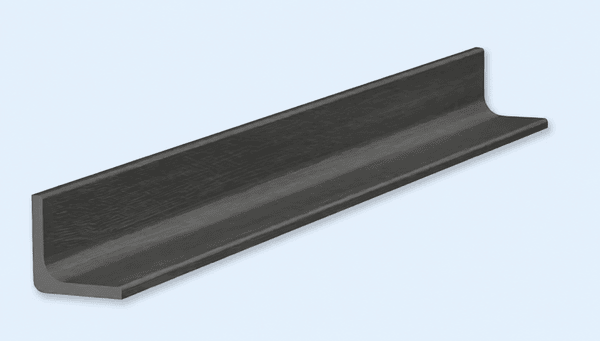
A36 steel is commonly used for steel plates, beams, angles, channels, brackets, gussets, base plates, frames, machinery supports, tanks, and miscellaneous fabricated components. Its appeal comes from being strong enough for many structural jobs while remaining easier to cut, weld, drill, bend, and machine than many higher-carbon or specialty alloy steels.
Quick Answer: What Is A36 Carbon Steel?
A36 carbon steel is a low-carbon, mild structural steel grade defined by ASTM A36/A36M. It is designed for structural shapes, plates, and bars that may be welded, bolted, or riveted in buildings, bridges, frames, equipment, and general fabrication. Its minimum yield strength is commonly associated with 36,000 psi, or about 250 MPa, while its ultimate tensile strength is typically listed in the 58,000–80,000 psi range.
The main reason A36 is so popular is not that it has the highest strength of all steels. It is popular because it is predictable, economical, easy to source, and compatible with common shop processes. For many projects, that combination is more useful than choosing a more expensive alloy with properties that are not required.
Key A36 Steel Facts
| Property | Typical / Common Value |
|---|---|
| Material type | Low-carbon structural steel |
| Standard | ASTM A36/A36M |
| Minimum yield strength | 36,000 psi / about 250 MPa |
| Ultimate tensile strength | 58,000–80,000 psi |
| Modulus of elasticity | About 29,000,000 psi |
| Elongation | Commonly around 20–23% minimum, depending on gauge length |
| Melting range | About 1,425–1,538 °C / 2,600–2,800 °F |
| Common forms | Plate, sheet, bar, angle, channel, beam, structural shapes |
| Main strengths | Weldability, availability, affordability, ductility |
| Main limitation | Requires protection against corrosion outdoors |
These values are commonly used as design and material-selection references for A36 steel. Specific requirements may vary by product form, thickness, supplier, and purchase specification, so certified mill test reports should be reviewed for critical applications.
What Makes A36 Steel a Low-Carbon Steel?
A36 is considered a low-carbon or mild steel because its carbon content is relatively low compared with medium-carbon and high-carbon steels. Low carbon content helps make the steel more ductile, easier to weld, easier to form, and less prone to brittle behavior during common fabrication operations.
Carbon is important because it strongly affects steel behavior. More carbon generally increases hardness and strength, but it can also reduce ductility and weldability. A36 uses a low-carbon approach so that the material remains practical for structural fabrication, shop welding, thermal cutting, bending, punching, and drilling.
This is why A36 is frequently selected for projects where ease of fabrication matters as much as strength. A high-strength specialty steel may look better on a datasheet, but it may cost more, require stricter welding procedures, or be less convenient to process. A36 sits in a useful middle ground.
How ASTM A36 Defines the Material
ASTM A36/A36M is the standard specification that defines this carbon structural steel grade. It applies to shapes, plates, and bars of structural quality, and the material can be used in welded, bolted, or riveted construction. ASTM’s own abstract states that heat analysis is used for chemical composition and that tensile strength, yield strength, and elongation must be evaluated by tension testing.
For buyers and engineers, this standardization is important. It means A36 is not just a vague “mild steel” label. It is a recognized grade with defined expectations for chemistry and mechanical performance. That makes it easier to specify, quote, source, inspect, and design around.
When ordering A36 steel, it is still good practice to request material certifications or mill test reports when the application requires traceability. The standard gives a baseline, but actual values can vary from one heat or production batch to another.
A36 Steel Mechanical Properties
The most important A36 steel mechanical properties are yield strength, tensile strength, modulus of elasticity, and elongation.
Yield strength is the stress level where the material begins to deform permanently. For A36, the commonly cited minimum yield strength is 36,000 psi. This is one of the reasons the grade is named A36.
Ultimate tensile strength is the maximum tensile stress the material can withstand before fracture. A36 is commonly listed in the 58,000–80,000 psi range.
Modulus of elasticity describes stiffness. A36’s modulus is commonly treated as approximately 29,000,000 psi, similar to many other carbon steels.
Elongation measures ductility. A36 can stretch and deform before breaking, which is valuable in structural applications because visible deformation can occur before sudden failure. Xometry’s guide identifies yield strength, tensile strength, modulus of elasticity, and elongation as key A36 mechanical properties.
Why Yield Strength Matters in A36 Steel
Yield strength is one of the most important design values for A36 steel. In simple terms, it tells engineers how much stress the steel can take before it no longer springs back to its original shape.
For example, a beam, plate, bracket, or frame member should normally be designed so that service loads remain below the material’s yield point after proper safety factors are applied. Once the yield strength is exceeded, the steel may bend, stretch, or distort permanently. Even if it does not break, the part may no longer perform as intended.
A36’s 36,000 psi minimum yield strength provides a predictable baseline for structural calculations. This makes it useful for building frames, support members, base plates, gussets, fixtures, and other fabricated parts where consistent mechanical behavior matters.
A36 Yield Strength vs. Tensile Strength
Yield strength and tensile strength are related, but they are not the same.
Yield strength is the point where permanent deformation begins. Tensile strength is closer to the point where the material is approaching fracture under pulling load. A36 steel typically has a yield strength of about 36,000 psi and an ultimate tensile strength of about 58,000–80,000 psi.
The gap between these values is useful. It means A36 can deform plastically before it breaks. In many structural applications, this ductility is important because it can provide warning before failure. Brittle materials may fracture suddenly, while ductile steels can bend, stretch, or distort first.
This does not mean A36 should be loaded beyond its yield point in normal service. It means the material has a useful reserve of deformation capacity, which is one reason mild structural steels remain common in engineered structures.
A36 Steel Chemical Composition
A36 steel is primarily iron, with controlled amounts of carbon and other elements. The exact chemical composition can vary depending on product form and thickness, but the common elements include carbon, manganese, phosphorus, sulfur, silicon, and sometimes copper.
| Element | Role in A36 Steel |
|---|---|
| Iron | Base metal and main structural component |
| Carbon | Improves strength and hardness while staying low enough for weldability |
| Manganese | Supports strength and helps manage sulfur effects |
| Phosphorus | Controlled to reduce brittleness risks |
| Sulfur | Limited to reduce cracking and hot-shortness issues |
| Silicon | Often used as a deoxidizer during steelmaking |
| Copper | May be specified or present in limited amounts depending on requirements |
A36 is not defined by extremely tight chemistry alone. Its usefulness comes from the combination of chemical limits and required mechanical properties.
How Carbon Content Affects A36 Steel
Carbon content has a major influence on how steel behaves. As carbon increases, steel usually becomes harder and stronger, but also less ductile and more difficult to weld. A36 keeps carbon relatively low so the steel remains easier to fabricate.
This low-carbon profile is one of the reasons A36 is widely used in welded structures. It can generally be welded with common welding processes when proper procedures are followed. It is also easier to drill, cut, bend, and machine than many harder steels.
For general fabrication, that balance matters. A material that is slightly stronger but much harder to weld or machine may increase labor cost, tooling cost, inspection requirements, and production time. A36 often wins because it performs reliably without making shop work unnecessarily complicated.
Is A36 Steel Good for Welding?
Yes, A36 is generally considered good for welding. Its low carbon content helps reduce the risk of cracking compared with higher-carbon steels, and it is commonly joined using standard welding processes such as SMAW, GMAW/MIG, FCAW, and other suitable methods.
That said, “easy to weld” does not mean “no procedure required.” Weld quality still depends on joint design, filler metal, base metal thickness, preheat requirements, welder skill, heat input, service environment, and applicable codes. ASTM also notes that when the steel is to be welded, a suitable welding procedure should be used for the grade and intended service.
For critical structures, pressure-related work, heavy weldments, or code-governed projects, welding should follow the relevant standard, engineering drawing, welding procedure specification, and inspection requirements.
Is A36 Steel Easy to Machine?
A36 steel can be machined with standard CNC mills, drills, saws, and turning equipment. It is not as free-machining as some grades designed specifically for high-speed machining, but it is generally workable using appropriate speeds, feeds, tooling, fixturing, and coolant.
Typical CNC operations for A36 include drilling, tapping, facing, contour milling, slotting, boring, and cutting plate profiles. Fabricators often use A36 for brackets, spacers, mounting plates, fixture components, weldment details, and general industrial hardware.
Machining Tips for A36 Steel
When machining A36 steel, the goal is usually to control heat, maintain tool life, and avoid poor surface finish. The following practices are commonly useful:
- Use sharp tooling and appropriate chip loads.
- Use coolant or cutting fluid when heat or surface finish is a concern.
- Clamp the workpiece securely to reduce vibration.
- Adjust feeds and speeds for scale, hardness variation, and material condition.
- Remove mill scale when it interferes with finish, tolerance, or tool life.
- Consider secondary finishing if a smoother surface is required.
Hot-rolled A36 can have mill scale on the surface. That scale may be acceptable for some structural uses, but it can affect cutting, coating adhesion, welding preparation, and appearance. For painted, powder-coated, plated, or precision-machined parts, surface preparation should be considered early.
A36 Steel Surface Finish and Corrosion Resistance
Bare A36 steel is not corrosion-resistant like stainless steel. When exposed to moisture, oxygen, outdoor weather, salt, or chemicals, it can rust. This does not make A36 unsuitable for outdoor use, but it does mean it usually needs a protective finish.
Common protection options include:
- Paint
- Powder coating
- Hot-dip galvanizing
- Zinc-rich primers
- Black oxide for certain indoor uses
- Oil or temporary rust inhibitors
- Regular maintenance coatings
For harsh environments, stainless steel, weathering steel, coated steel, or another alloy may be a better choice depending on the design requirement.
Common Uses of A36 Carbon Steel
A36 carbon steel is used across construction, fabrication, infrastructure, and manufacturing. Its biggest advantage is versatility. It is strong enough for many structural parts, yet economical and widely available.
Structural Framing
A36 is commonly used in structural shapes, support frames, building components, platforms, mezzanines, brackets, and base plates. It can be fabricated into beams, columns, gussets, and connection plates for many types of load-bearing assemblies.
Bridges and Infrastructure
Because ASTM A36 covers carbon structural steel for bridges, buildings, and general structural purposes, it has long been associated with infrastructure and civil construction applications. It may be used in plates, shapes, and components where the design calls for A36 or where it remains suitable for the load and service environment.
Machinery and Equipment
A36 is frequently used in machine frames, equipment bases, guards, supports, mounting plates, fixtures, and non-precision structural machine components. Its weldability and availability make it practical for custom equipment and industrial fabrication.
Tanks, Low-Pressure Containers, and Fabricated Assemblies
A36 plate is often used for fabricated tanks, bins, hoppers, enclosures, platforms, and similar assemblies where code requirements, pressure ratings, corrosion exposure, and service conditions allow it.
Miscellaneous Metal Fabrication
A36 is common in stairs, railings, gates, handrails, trailer parts, shop fixtures, brackets, frames, repair plates, and general welded steel projects. Xometry lists structural framing, bridge construction, machinery components, tank and vessel fabrication, construction, transportation, pipe and tank applications, and miscellaneous fabrication as common A36 uses.
A36 Steel in Construction
In construction, A36 is valued because it is predictable, affordable, and available in many shapes and sizes. It can be cut, drilled, welded, bolted, and fitted using standard structural fabrication methods.
Common construction-related A36 parts include:
- Base plates
- Anchor plates
- Gusset plates
- Connection plates
- Angles
- Channels
- Brackets
- Frames
- Stiffeners
- Miscellaneous support steel
For modern structural projects, engineers may also specify other grades such as A572, A992, or project-specific steels depending on strength, weight, code, seismic, or availability requirements. A36 remains important, but it is not automatically the best choice for every structural member.
A36 Steel in Manufacturing
Manufacturers use A36 when they need practical strength without unnecessary material cost. It is common in welded frames, jigs, fixtures, machine bases, industrial carts, guards, platforms, equipment skids, and heavy-duty mounting parts.
A36 can also be laser cut, plasma cut, waterjet cut, saw cut, drilled, formed, punched, and machined. This makes it convenient for job shops and production environments where the same material may pass through multiple processes before final assembly.
For precision shafts, pins, bushings, or close-tolerance turned components, another steel such as 1018, 1045, 4140, or a free-machining grade may be more suitable. For large welded structures, plates, frames, and general supports, A36 is often a practical option.
A36 Steel vs. 1018 Steel
A36 and 1018 are both low-carbon steels, but they are often used for different reasons.
A36 is typically associated with structural shapes, plates, and hot-rolled products. It is usually chosen for frames, brackets, base plates, construction parts, and welded assemblies.
1018 is often chosen when better dimensional control, smoother surface finish, or improved machinability is needed. Cold-finished 1018 can offer better tolerances and a cleaner surface than hot-rolled A36.
| Comparison Point | A36 Steel | 1018 Steel |
|---|---|---|
| Common form | Plate, structural shapes, bars | Bars, rods, machined stock |
| Typical process | Often hot-rolled | Often cold-finished |
| Main advantage | Structural value and cost | Finish, tolerance, machinability |
| Common use | Frames, plates, brackets, supports | Pins, shafts, machined parts |
| Surface finish | Often mill scale if hot-rolled | Usually smoother if cold-drawn |
A36 Steel vs. Higher-Strength Steels
A36 is not the strongest structural steel available. Higher-strength grades can provide greater yield strength, better strength-to-weight performance, or improved toughness for demanding applications.
However, stronger is not always better. Higher-strength steels can cost more, require different welding procedures, be harder to form, or be less available in certain sizes. A36 is often chosen when its strength is sufficient and the project benefits from lower cost, easier fabrication, and broad supply.
Choose A36 when:
- The design load fits within A36 properties.
- Weldability and fabrication ease matter.
- Material cost is a major factor.
- Standard structural shapes or plates are needed.
- The environment can be managed with coatings or indoor service.
Consider another grade when:
- Higher yield strength is required.
- Weight reduction is critical.
- Corrosion resistance is a primary requirement.
- Impact toughness at low temperature is required.
- Tight machining tolerances or superior surface finish are needed.
Melting Point and Temperature Behavior of A36 Steel
A36 steel has a melting range commonly listed around 1,425–1,538 °C, or about 2,600–2,800 °F. This range is relevant to steelmaking, casting, recycling, and high-temperature processing, but normal welding involves localized melting rather than heating the entire part to its full melting range.
Temperature matters during fabrication. Heating makes steel easier to form, but excessive or poorly controlled heat can cause distortion, residual stress, changes in the heat-affected zone, or reduced dimensional accuracy.
Cold temperatures can also matter. Like many carbon steels, A36 may become less tough in very low-temperature service. For cold-weather impact applications, engineers should evaluate toughness requirements rather than assuming standard A36 is acceptable.
Standard A36 Steel Sheet and Plate Thicknesses
A36 steel is available in many sheet, plate, bar, and structural sizes. Sheet thicknesses may be described by gauge, while thicker plate is often described in fractions or decimal inches.
Common examples include:
| Size / Gauge | Approximate Thickness | Typical Use |
|---|---|---|
| 16 gauge | About 0.0598 in | Light panels, covers, enclosures |
| 10 gauge | About 0.1345 in | Brackets, guards, formed parts |
| 1/4 in plate | 0.250 in | Base plates, gussets, supports |
| 1/2 in plate | 0.500 in | Heavy equipment parts, structural plates |
When ordering material, always confirm the actual decimal thickness, tolerance, surface condition, and whether the supplier is providing sheet, plate, flat bar, or another product form.
Advantages of A36 Carbon Steel
A36 remains popular because it solves many fabrication problems at a reasonable cost.
1. Cost-Effectiveness
A36 is widely produced and widely stocked. Its chemistry is not exotic, and its supply chain is mature. This helps keep material costs competitive.
2. Good Weldability
The low-carbon composition makes A36 easier to weld than many higher-carbon steels, assuming the correct welding procedure is used.
3. Good Ductility
A36 can deform before breaking. This is useful for forming and can be beneficial in structural behavior.
4. Easy Fabrication
A36 can be cut, drilled, punched, formed, machined, and welded using standard shop equipment.
5. Broad Availability
A36 is available from many steel suppliers and service centers in plate, sheet, bar, angle, channel, and beam forms.
6. Versatility
The same material family can be used for construction parts, machinery frames, brackets, repair plates, support structures, and custom fabrication.
Limitations of A36 Carbon Steel
A36 is useful, but it is not ideal for every application.
The biggest limitation is corrosion resistance. Bare A36 will rust if exposed to moisture or outdoor conditions. It usually needs paint, powder coating, galvanizing, or another protective finish.
Another limitation is strength. A36 is strong enough for many applications, but higher-strength steels may be needed when weight, span, load, fatigue, seismic design, or engineering constraints require improved properties.
A36 may also be less suitable for precision-machined parts where tight tolerances and smooth finish are important. In those cases, cold-finished 1018, 4140, or another machining-friendly grade may be a better fit.
When Should You Choose A36 Steel?
A36 is a strong choice when you need a practical structural steel for fabrication, welding, and general-purpose industrial work. It is especially useful for:
- Welded frames
- Base plates
- Brackets
- Gussets
- Platforms
- Stairs and railings
- Equipment supports
- Machinery bases
- Structural plates
- Repair and reinforcement parts
- General steel fabrication
A36 may not be the best choice for marine corrosion exposure without coatings, precision shafts, high-wear parts, high-strength lightweight structures, very low-temperature impact service, or stainless appearance requirements.
Final Takeaway
A36 carbon steel is a practical, widely available structural steel that works well for many fabrication, construction, and industrial applications. Its 36,000 psi minimum yield strength, good weldability, ductility, machinability, and cost-effectiveness make it a reliable choice for plates, frames, brackets, base plates, gussets, and general steel components.
It is not the strongest or most corrosion-resistant steel, but it is often the most economical and workable option when the design requirements match its properties. For best results, confirm the required ASTM grade, thickness, surface condition, finish, tolerances, and mill certifications before ordering.