What purchasing managers and OEM manufacturers should do when a supplier rejects a technical drawing, refuses to quote, or claims a component cannot be produced.
You send a technical drawing to a manufacturer, request a quotation, and expect a price and delivery time.
Instead, the supplier responds:
“Unfortunately, we cannot manufacture this part.”
Sometimes the explanation is straightforward. The component exceeds the supplier’s machine capacity, requires a manufacturing process they do not offer, or contains features their equipment cannot access.
Other times, the response is less helpful. The supplier says the tolerances are too tight, the geometry is too complicated, or the material is difficult to machine.
For an OEM purchasing manager, this creates a problem. The component may already be approved by engineering, required for an upcoming production order, or needed urgently to maintain an existing machine.
Redesigning the part can delay the project. Finding another supplier takes time. And accepting the first manufacturer’s assessment without further investigation could eliminate a perfectly feasible manufacturing solution.
A supplier saying that a part cannot be manufactured does not necessarily mean the part is impossible to produce. It may simply mean the component cannot be manufactured economically or reliably using that supplier’s equipment, processes, capacity, or production methods.
Understanding this distinction is the first step toward solving the problem.
In this article, we explain why manufacturers reject technical drawings, how purchasing departments should respond, which alternative manufacturing methods are available, and when it makes sense to request a second manufacturing feasibility assessment.
What Does It Mean When a Supplier Says a Part Cannot Be Manufactured?
When a manufacturer rejects a technical drawing, the rejection typically falls into one of four categories.
1. Technical limitations: The supplier does not have suitable equipment, tooling, inspection capability, or production processes.
2. Manufacturing complexity: The part may be possible to produce, but the geometry, material, tolerances, or sequence of operations makes the project difficult.
3. Commercial limitations: The order quantity, tooling investment, setup time, or potential project value does not fit the manufacturer’s business model.
4. Missing or conflicting requirements: The supplier cannot determine whether the component can be produced because the technical documentation is incomplete or contains contradictions.
A fifth possibility is that the design is genuinely infeasible under its current specifications.
For example, a technical drawing may contain geometrically contradictory dimensions, inaccessible features that must be produced as a single piece, or material and performance requirements that cannot be achieved simultaneously.
The important question is therefore not simply whether the manufacturer rejected the part.
The important question is why the manufacturer rejected it.
A rejection based on machine capacity requires a different solution from a rejection caused by unrealistic tolerances or unsuitable production quantities.
1. Ask the Manufacturer Why the Part Was Rejected
Before contacting another supplier, request a specific technical explanation.
A response such as “We cannot manufacture this component” is not enough to determine the next step.
Ask the supplier to identify the actual limitation.
Useful questions include:
- Which feature prevents the part from being manufactured?
- Is the problem related to machine size or travel?
- Is a cutting tool unable to access a particular surface?
- Are the specified tolerances beyond the available process capability?
- Does the material create manufacturing difficulties?
- Is the required heat treatment or surface finish unavailable?
- Is the order quantity too small?
- Would the component be feasible using a different production process?
- Could it be produced if engineering approved a specific modification?
These questions help distinguish a genuine design problem from a supplier-specific limitation.
Example: A Deep Internal Cavity
Imagine a steel component containing a deep, narrow internal cavity with a tightly controlled surface finish.
A conventional CNC milling supplier may reject the drawing because the available cutting tools cannot reach the required depth while maintaining sufficient rigidity.
However, another supplier may be able to evaluate:
- Specialized long-reach machining.
- Electrical discharge machining (EDM), if the material and geometry are suitable.
- Manufacturing the component as multiple pieces.
- Casting or another near-net-shape process.
- A revised assembly concept.
Each alternative has technical limitations, and not all will be suitable.
Nevertheless, the rejection may reflect the original supplier’s available processes rather than the absolute manufacturability of the component.
For projects involving complex geometries, MegaMETA’s CNC machining services provide access to different machining technologies through a coordinated manufacturing partner network.
2. Check Whether the Problem Is Machine Capacity
One of the most straightforward reasons for rejecting a part is insufficient equipment capacity.
A machine shop may manufacture small precision components extremely well but lack the equipment required for larger or more complex workpieces.
Common limitations include:
- Maximum turning diameter.
- Maximum turning length.
- CNC milling travel.
- Available fourth- or fifth-axis movement.
- Machine table load capacity.
- Spindle clearance.
- Workholding and fixturing limitations.
- Tool length and accessibility.
Large Components Require Different Equipment
Consider a large steel ring that requires precision turning.
The supplier may have conventional CNC lathes capable of handling smaller diameters but no vertical turning equipment suitable for the component.
That does not make the ring impossible to manufacture.
It means the project requires equipment with an appropriate working envelope, rigidity, workholding arrangement, and inspection capacity.
The same applies to large housings, long shafts, machine frames, and oversized plates.
When Five-Axis CNC Machining May Help
A supplier using only three-axis milling machines may have difficulty reaching several complex surfaces without multiple setups.
Five-axis CNC machining can sometimes improve access to angled surfaces, reduce the number of setups, and simplify the machining of complex geometries.
However, five-axis machining is not automatically a solution for every inaccessible feature.
Internal cavities, tool collisions, workpiece rigidity, and cutting-tool dimensions may still create restrictions.
What should purchasing managers do?
Request a manufacturing assessment from a supplier with a wider range of machining capabilities rather than assuming the first supplier’s machine limitations apply to all manufacturers.
3. Determine Whether the Tolerances Are Actually Achievable
Tight tolerances are another common reason manufacturers refuse projects.
A drawing may specify dimensions such as:
- ±0.005 mm on a critical diameter.
- Tight concentricity or positional requirements.
- Very low surface roughness.
- Close relationships between several machined surfaces.
- Strict flatness or perpendicularity requirements.
These specifications may be achievable on certain components, but they can become difficult depending on the material, geometry, size, and manufacturing sequence.
Why Geometry Matters as Much as the Tolerance
A tolerance that is realistic on a short, rigid steel component may be extremely difficult on a long, thin-walled aluminium structure.
Thin walls may deflect during machining.
Large plates may change shape when released from their fixtures.
Heat treatment can introduce distortion.
Residual stresses in raw material may cause dimensional movement during material removal.
A manufacturer must consider all these factors before committing to a tolerance.
The Difference Between Machining Accuracy and Final-Part Accuracy
A machine tool may have excellent positioning capability, but that does not guarantee the finished workpiece will maintain every specified dimension.
Final accuracy also depends on:
- Material stability.
- Cutting forces.
- Tool wear.
- Workholding.
- Temperature.
- Measurement uncertainty.
- Machining sequence.
- Post-processing operations.
This is especially important when the drawing requires very tight tolerances across features produced in different setups.
Can Grinding Solve the Problem?
Sometimes.
Precision grinding may achieve tighter dimensional and surface requirements than conventional turning or milling.
Depending on the component, suitable processes may include surface grinding, cylindrical grinding, internal grinding, or other finishing operations.
However, grinding requires accessible surfaces, suitable material conditions, and enough finishing allowance.
It cannot automatically correct every geometric or design problem.
Purchasing recommendation: Ask the supplier which tolerances are unachievable, why they are difficult, and whether an alternative manufacturing route can meet the original approved drawing.
Do not relax engineering requirements solely to obtain a quotation.
Any specification change must be approved by the responsible design authority.
4. Consider Whether the Material Is Causing the Rejection
Some materials are significantly more difficult to machine, form, weld, or heat-treat than others.
For example, manufacturers may reject parts involving:
- Titanium alloys.
- Hardened alloy steels.
- Certain nickel-based alloys.
- Abrasive or reinforced engineering plastics.
- High-strength structural steels.
- Materials requiring specialized post-processing.
- Uncommon grades with limited supply availability.
A supplier accustomed to machining standard aluminium or structural steel may not have the experience, tooling, or process controls necessary for more demanding materials.
Material Availability Can Also Be the Problem
Sometimes the difficulty is not machining the material.
It is obtaining the required grade, condition, dimensions, or certification within the requested delivery time.
For instance, a particular alloy may be available as round bar but difficult to source in the specified plate thickness.
Alternatively, a component may require a material certificate or mechanical properties that the supplier’s normal stock does not provide.
What Should You Do?
First, determine whether the rejection concerns:
- Machinability or manufacturability.
- Material availability.
- Required mechanical properties.
- Heat-treatment capability.
- Certification and traceability.
- Cost or delivery time.
These problems require different solutions.
A material substitution may sometimes be possible, but only when the responsible engineering team confirms that the alternative meets the application’s mechanical, corrosion, temperature, and regulatory requirements.
For difficult materials, the most effective solution may be a manufacturer with suitable machining experience rather than changing the specified material.
5. The Part May Require More Than One Manufacturing Process
One of the most important reasons for manufacturing rejection is the assumption that a component must be produced using a single process.
A purchasing department may approach a CNC machining supplier because the drawing shows a metal component with accurate dimensions.
However, manufacturing the entire part from solid material may be unnecessarily difficult, wasteful, or expensive.
A different production route may provide a more practical solution.
CNC Machining from Solid Material
Machining from solid stock is often attractive for prototypes, small batches, and components with relatively accessible geometries.
Advantages include flexible design changes, limited dedicated tooling investment, and the ability to achieve precise machined features.
However, it can become inefficient when a large amount of material must be removed.
For example, machining a complex housing from a solid block may require extensive roughing operations and produce substantial material waste.
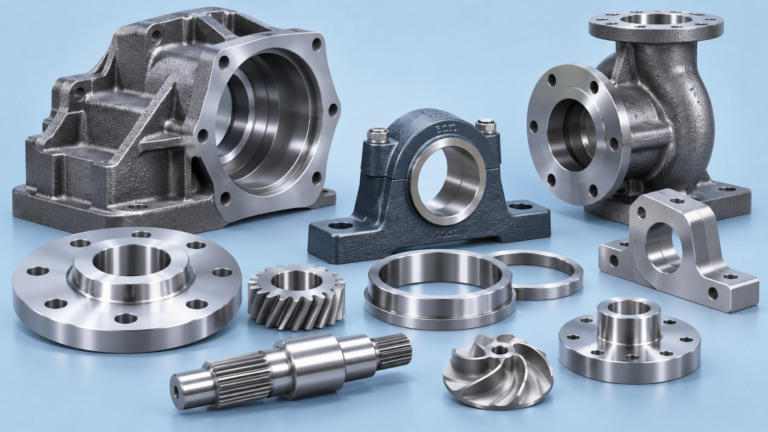
Casting Followed by CNC Machining
Casting can provide a near-net-shape starting point for components with complex external shapes, internal cavities, or substantial material volumes.
Critical features can then be machined to the required dimensions.
Typical examples include:
- Gearbox housings.
- Pump bodies.
- Machine bases.
- Bearing housings.
- Industrial equipment frames and supports.
Casting introduces its own requirements, including tooling, allowances, shrinkage, draft, defect control, and material verification.
It may not be economically suitable for every low-volume order.
For appropriate projects, however, combining casting with precision machining can be more practical than removing large amounts of material from solid stock.
Explore MegaMETA’s casting services for projects requiring cast components with subsequent machining.
Welding Followed by Precision Machining
Large structural components can sometimes be manufactured from steel plates, profiles, and welded sections.
After fabrication, precision machining can establish mounting surfaces, bearing interfaces, holes, and other critical features.
This approach may be suitable for:
- Industrial machine frames.
- Welded equipment bases.
- Structural supports.
- Large mounting assemblies.
- Equipment housings.
The main challenge is dimensional stability.
Welding introduces heat and residual stresses, which can cause distortion.
An appropriate manufacturing plan may require controlled welding sequences, stress relief, machining allowances, intermediate measurements, or finish machining after fabrication.
Sheet Metal Fabrication and Bending
Some components that appear complex or costly to machine can be produced more efficiently using laser cutting, bending, welding, and secondary machining.
For example, a formed mounting bracket may be simpler to manufacture from sheet metal than from a large solid billet.
However, bend radii, material thickness, hole positions, and forming tolerances must be considered.
Where appropriate, MegaMETA’s sheet metal fabrication services can combine cutting, bending, welding, and additional machining.
Comparing Alternative Manufacturing Methods
| Manufacturing route | Potential advantage | Important limitation |
|---|---|---|
| CNC machining from solid | Flexible, accurate, limited dedicated tooling | Material waste and access restrictions |
| Casting + CNC machining | Complex shapes, cavities, reduced machining stock | Tooling, casting defects, dimensional allowances |
| Forging + CNC machining | Suitable for selected high-strength components | Tooling investment and geometry limitations |
| Welding + CNC machining | Large structures and multi-part assemblies | Distortion and residual stresses |
| Sheet metal fabrication | Efficient formed structures and enclosures | Forming limits and bend tolerances |
| EDM + conventional machining | Selected difficult-to-access features | Material suitability, speed, and geometry constraints |
A component rejected for one manufacturing process may still be feasible using a different combination of processes.
The correct choice depends on geometry, material, quantity, functional requirements, and total production cost.
6. Check Whether the Order Quantity Is the Real Problem
Not every manufacturing rejection is technical.
Sometimes the supplier can produce the component but does not want the order.
This is particularly common with low-volume manufacturing.
A supplier optimized for recurring batches may decline:
- Single prototypes.
- Orders of five or ten pieces.
- Components requiring extensive setup.
- Parts with expensive dedicated tooling.
- One-time development projects.
- Orders involving disproportionate inspection or documentation work.
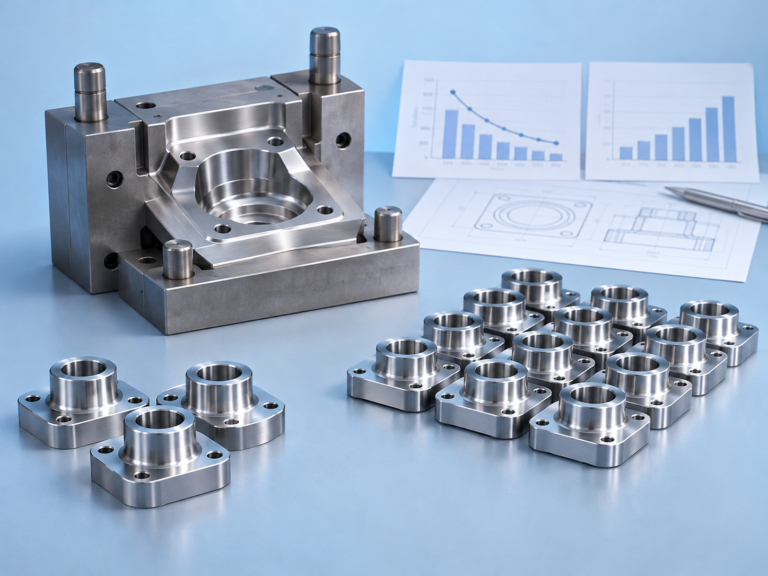
For example, a manufacturer may need to prepare a special fixture and a complex CNC program for a component that will only be ordered twice.
The project may be technically feasible but commercially unattractive.
Why Production Volume Changes the Decision
Manufacturing costs generally consist of both fixed and variable elements.
Fixed or non-recurring costs may include:
- Engineering review.
- Programming.
- Fixture design.
- Tool preparation.
- Setup.
- First-article inspection.
Variable costs may include:
- Material.
- Machining time.
- Tool wear.
- Heat treatment.
- Finishing.
- Recurring inspection.
When the order quantity is small, fixed costs are distributed over relatively few components.
This can create a high unit price.
How Purchasing Managers Can Respond
If the initial order is small but future production is expected, communicate the complete demand picture.
For example:
- Initial requirement: 10 components.
- First production batch: 100 components.
- Estimated annual demand: 600 components.
- Expected production lifetime: 5 years.
These are illustrative figures, but they demonstrate the information a manufacturer needs to evaluate the project commercially.
If the requirement is genuinely a one-off order, look for manufacturers whose business models support prototypes or small batches.
Do not assume that every supplier refusing a small order lacks the required manufacturing capability.
7. An Incomplete Drawing Can Look Like an Impossible Part
Manufacturers sometimes reject RFQs because they cannot interpret the drawing confidently.
This does not mean the geometry is necessarily impossible.
It may mean that the supplied information is insufficient to establish a reliable manufacturing process.
Common problems include:
- Missing material grades.
- Conflicting dimensions.
- Unclear datum references.
- Tolerances that contradict each other.
- Missing thread specifications.
- Unspecified heat-treatment conditions.
- Surface finishes without clear requirements.
- Differences between the CAD model and 2D drawing.
- Missing drawing revisions.
- Unclear inspection requirements.
Example: Conflicting Geometrical Requirements
Suppose a drawing contains several critical holes and specifies their positions relative to different datum systems.
If the requirements are inconsistent or impossible to satisfy simultaneously, the supplier cannot manufacture a conforming part without clarification.
In this case, finding another CNC machine will not solve the problem.
The technical documentation must be corrected by the responsible engineering team.
A Practical Drawing Review
Before submitting the project elsewhere, verify that:
- The drawing revision is current.
- The CAD model matches the drawing.
- The material specification is complete.
- Critical tolerances are clearly defined.
- Heat treatment and surface treatment are specified.
- Inspection requirements are understood.
- All special notes are technically consistent.
A complete RFQ reduces ambiguity and improves the likelihood of receiving a meaningful manufacturing quotation.
8. Ask for an Alternative Manufacturing Proposal
If a supplier rejects a part, one of the most useful responses is to request a technically justified alternative.
Instead of immediately asking engineering to redesign the component, ask the manufacturer what would make the part feasible.
The supplier might recommend:
- A different manufacturing sequence.
- Alternative fixturing.
- Producing a near-net-shape blank before machining.
- Using a different machining technology.
- Applying a finishing operation.
- Separating a complex part into an assembly.
- Changing a noncritical feature, subject to engineering approval.
A good alternative proposal should explain the manufacturing limitation and the proposed solution.
It should also identify whether the solution affects the original drawing.
Keep the Approved Specification as the Baseline
For controlled OEM components, request two clearly separated evaluations whenever possible.
Option A: Manufacturing to the existing approved drawing.
This establishes whether the part can be manufactured without design changes.
Option B: Manufacturing using a proposed engineering modification.
This identifies possible design changes, their expected manufacturing benefits, and the need for engineering review.
These options should not be confused.
A manufacturer must not substitute materials, remove features, relax tolerances, or change the manufacturing requirements without the necessary approval.
The objective is to find a feasible solution while preserving component functionality and configuration control.
9. When Should You Contact a Different Manufacturer?
A second manufacturing assessment is particularly valuable when the original supplier’s rejection is based on a capability limitation.
Consider contacting another manufacturer when:
- The component exceeds available machine dimensions.
- The supplier cannot perform a required process.
- The material is outside its normal experience.
- The supplier lacks suitable inspection equipment.
- The manufacturer cannot coordinate heat treatment or finishing.
- The order quantity does not match its production model.
- The rejection provides no clear technical explanation.
- A multi-process manufacturing route may be more suitable.
However, contacting ten manufacturers with the same incomplete drawing may only produce ten similar rejections.
It is more effective to identify the actual problem and approach suppliers equipped to solve it.
What Makes an Alternative Supplier Suitable?
The replacement supplier should be evaluated against the requirements of the component, not simply its willingness to quote.
Important considerations include:
- Relevant manufacturing equipment.
- Experience with comparable materials.
- Appropriate workholding and tooling.
- Suitable inspection capabilities.
- Required production quantity.
- Quality documentation.
- Delivery capacity.
- Ability to coordinate multiple processes.
For complex industrial components, a supplier with access to several manufacturing technologies may be useful because it can evaluate more than one possible production route.
10. Realistic Manufacturing Scenarios: Rejection and Possible Solutions
The following hypothetical examples illustrate how different rejection reasons may lead to different solutions.
Scenario A: The Part Is Too Large for the CNC Machine
Situation: A supplier rejects a large steel flange because its CNC lathe cannot accommodate the diameter.
Possible solution: Evaluate vertical turning or another machine with sufficient diameter, load capacity, and workholding capability.
Important consideration: The component’s weight, material, tolerances, and measuring requirements must also be reviewed.
Scenario B: A Housing Requires Extensive Material Removal
Situation: A manufacturer declines to quote a large housing because machining it from solid material requires excessive roughing time.
Possible solution: Evaluate casting followed by precision CNC machining of the critical features.
Important consideration: Casting feasibility, tooling investment, material properties, production quantities, and internal cavities must be considered.
Scenario C: A Welded Frame Cannot Meet the Final Tolerances
Situation: A fabrication supplier says it cannot guarantee tight mounting-surface tolerances after welding.
Possible solution: Evaluate a manufacturing process with appropriate welding controls and finish machining after fabrication.
Important consideration: Distortion, residual stresses, workpiece handling, and inspection must be included in the production plan.
Scenario D: A Tight-Tolerance Shaft Is Rejected
Situation: A turning supplier cannot consistently meet the specified final diameter and surface roughness.
Possible solution: Evaluate CNC turning with a suitable finishing allowance followed by precision cylindrical grinding.
Important consideration: Material condition, shaft rigidity, geometry, and final measurement uncertainty remain important.
Scenario E: The Order Is Too Small
Situation: A supplier declines a batch of eight precision components because setup costs outweigh the expected project value.
Possible solution: Approach a supplier supporting prototype and small-batch production or provide a reliable forecast of future demand.
Important consideration: Small-batch manufacturing may still involve a higher unit price.
These examples demonstrate why a rejection should trigger a structured manufacturing review rather than an immediate assumption that the design is impossible.
11. How to Avoid Wasting Time on Repeated Supplier Rejections
When a project is delayed, purchasing managers may feel pressure to send the drawing to as many suppliers as possible.
However, a broad RFQ campaign without technical clarification can consume time without improving the outcome.
A more effective process includes five steps.
Step 1: Record the Original Rejection
Document what the supplier stated and which requirements could not be met.
Avoid reducing every rejection to the same category of “supplier cannot manufacture.”
Step 2: Classify the Limitation
Determine whether the main problem involves:
- Equipment capacity.
- Geometry.
- Tolerances.
- Material.
- Quantity.
- Documentation.
- Quality requirements.
- Delivery or commercial conditions.
Step 3: Identify What Must Remain Unchanged
Work with the engineering team to identify mandatory requirements.
This may include material, critical dimensions, safety-related characteristics, surface treatments, and performance criteria.
Step 4: Evaluate Alternative Processes or Suppliers
Select a manufacturing approach that addresses the identified limitation.
For example, a complex cavity may justify evaluation of casting or EDM, while a tight finished diameter may require precision grinding.
Step 5: Request a Revised Feasibility Assessment
Send a complete technical package and the known rejection reason to the alternative supplier.
This makes the new assessment more focused and avoids repeating the same unanswered questions.
The goal is not to find a supplier willing to say yes to everything. It is to find a manufacturer capable of demonstrating how the component can be produced reliably.
12. What Should Be Included in a Manufacturing Feasibility RFQ?
A purchasing team seeking a second manufacturing opinion should provide enough information for a meaningful technical review.
| Information | Why it matters |
|---|---|
| Current 2D drawing | Defines dimensions, tolerances, notes and acceptance requirements |
| 3D CAD model | Helps evaluate geometry, machining access and possible production processes |
| Material specification | Determines processing and sourcing requirements |
| Heat treatment | Influences material properties and dimensional stability |
| Surface treatment | May affect process sequence, dimensions and finishing |
| Initial quantity | Helps assess setup and tooling economics |
| Annual demand | Supports decisions about alternative manufacturing routes |
| Critical features | Identifies requirements that cannot be changed |
| Previous supplier’s rejection | Helps focus the review on the actual limitation |
| Required documentation | Defines inspection and traceability obligations |
| Delivery requirement | Determines whether the proposed route is practical |
| Permitted design changes | Clarifies whether alternatives may be proposed |
Example: A Manufacturing Feasibility Request
Component: Steel equipment housing.
Material: S355, with alternative materials subject to engineering approval.
Initial requirement: 20 pieces.
Expected annual demand: 200 pieces.
Current manufacturing proposal: CNC machining from solid material.
Previous supplier’s response: Rejected due to excessive material removal and manufacturing time.
Critical requirements: Bearing bores, mounting-face geometry, material properties, and positional tolerances.
Alternative processes: Casting or welded fabrication may be evaluated, subject to engineering approval.
Required deliverables: Feasibility assessment, proposed production method, price, lead time, and agreed inspection documentation.
This type of request gives the new supplier a clear technical objective instead of simply asking whether it can manufacture the component.
13. What If the Original Design Really Cannot Be Manufactured?
Not every rejected component can be rescued by changing suppliers.
Some specifications contain requirements that cannot realistically be satisfied together.
Examples may include:
- Geometrically contradictory dimensions.
- Impossible assembly or machining access.
- Material property combinations that are not achievable with the specified material and process.
- Features that cannot be inspected using a technically valid method.
- Tolerances incompatible with the component’s stability or service conditions.
- Requirements that conflict with applicable safety or regulatory constraints.
In these cases, the solution may require an engineering change.
A responsible manufacturing partner should explain the limitation rather than promise an outcome that cannot be verified.
How to Manage an Engineering Change
The purchasing department should coordinate the proposed modification with the design authority.
The review may involve:
- Identifying the conflicting requirement.
- Explaining the manufacturing limitation.
- Proposing a technically justified alternative.
- Evaluating mechanical and functional consequences.
- Reviewing quality and inspection implications.
- Approving the drawing revision.
- Releasing the updated specification to production.
For an existing production component, change control may also require validation, first-article inspection, customer approval, or other project-specific documentation.
The objective is to improve manufacturability without introducing unacceptable product risks.
14. Why a Multi-Process Manufacturing Partner Can Help
When a component requires several manufacturing technologies, sourcing each operation from a separate supplier can create additional work.
A project may involve:
- Raw material procurement.
- CNC turning.
- CNC milling.
- Casting or fabrication.
- Heat treatment.
- Precision grinding.
- Surface treatment.
- Dimensional inspection.
- Packaging and transport.
Each transition creates opportunities for delays, misunderstandings, or responsibility gaps.
For purchasing managers, coordinating these processes through one manufacturing partner can simplify technical discussions and project administration.
MegaMETA’s Approach to Manufacturing Projects
MegaMETA is based in Kaunas, Lithuania, and supports European industrial customers through a network of specialized manufacturing partners.
The company’s services include:
CNC Turning and Milling — For precision components, complex machined features, prototypes, and recurring production.
Metal Casting Services — For components where sand casting, investment casting, or die casting may provide a suitable production route, including subsequent CNC machining.
Sheet Metal Fabrication — For laser-cut, bent, welded, and finish-machined components and assemblies.
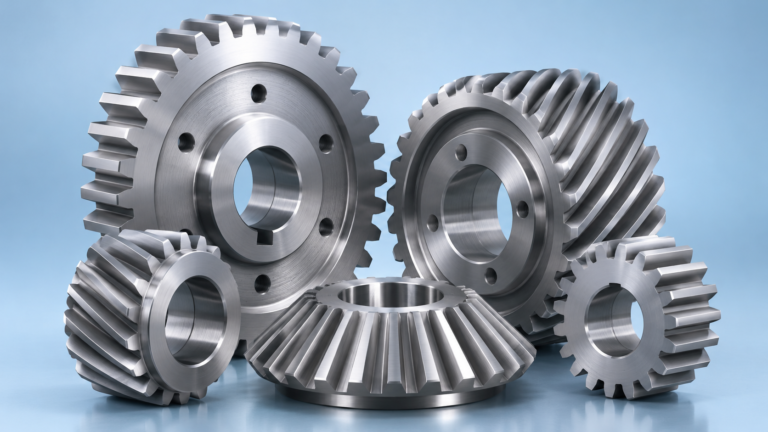
Gear Manufacturing — For specialized gear and transmission components requiring gear-cutting processes and appropriate inspection.
Quality Assurance — For manufacturing quality coordination, dimensional inspection, and controlled production requirements.
By coordinating these capabilities through its production network, MegaMETA can assess projects that may not fit the capabilities of a single conventional machine shop.
However, manufacturing feasibility must always be assessed individually.
The availability of multiple processes does not mean that every design can be produced, or that every alternative will be technically or economically appropriate.
Frequently Asked Questions
What should I do if a manufacturer says my part cannot be made?
Ask for the specific reason for rejection. Determine whether the problem involves equipment capacity, geometry, tolerances, material, quantity, or incomplete documentation. Then request a technical feasibility assessment from a supplier with capabilities appropriate to that limitation.
Does a supplier rejecting a drawing mean the part is impossible to manufacture?
No. A rejection may reflect the supplier’s machinery, processes, workload, experience, or commercial requirements rather than an absolute technical limitation. However, some designs genuinely require engineering changes before they can be manufactured.
Can another CNC supplier manufacture a rejected component?
Possibly. Different CNC suppliers have different machine capacities, tooling, fixturing, finishing processes, and technical experience. A more suitable supplier may be able to manufacture the part to the existing approved drawing.
Can a part be manufactured using a different process?
Yes, depending on its geometry and functional requirements. Alternatives can include casting followed by CNC machining, welding followed by finish machining, forging, EDM, or other appropriate production methods.
What if the specified tolerances are too tight?
Ask which tolerances create the problem and why. A different machining or finishing process may help. If the requirements are genuinely infeasible, they must be reviewed by the responsible engineering team before any changes are made.
Why do manufacturers refuse small production orders?
Small orders may require significant programming, setup, tooling, or inspection work relative to the quantity purchased. Some manufacturers are optimized for larger recurring production batches and may decline economically unattractive small orders.
Can a complex metal component be produced in several manufacturing stages?
Yes. Many components are manufactured using combinations of CNC machining, casting, welding, heat treatment, grinding, and surface finishing. The sequence must be planned to maintain the required dimensions and material properties.
What information should I send when seeking a second manufacturing opinion?
Provide the latest technical drawing, CAD model, material, quantity, annual demand, inspection requirements, delivery expectations, and the reason the previous supplier rejected the project.
Should I change the drawing to make manufacturing easier?
Only after an appropriate engineering review. Manufacturing improvements can reduce cost or improve feasibility, but changes to materials, dimensions, tolerances, or functional features must be approved by the responsible design authority.
Where can I find an alternative manufacturing supplier in Europe?
Look for a supplier with equipment, technical experience, inspection capability, and production processes suited to the specific component. MegaMETA supports European OEM customers with coordinated CNC machining, casting, gear manufacturing, sheet metal fabrication, and associated quality requirements.
Conclusion: A Rejected Drawing Is a Reason to Investigate, Not Automatically to Redesign
When a supplier says a component cannot be manufactured, the first response should not be to abandon the design or send the same RFQ to dozens of unrelated companies.
Instead, identify the reason for rejection.
The supplier may lack the correct machine capacity, tooling, manufacturing process, material experience, inspection capability, or commercial interest in the order.
In many cases, an alternative manufacturing route or a supplier with different capabilities may provide a solution.
In other situations, the drawing may need technical clarification or an approved engineering modification.
The key is to distinguish between a part that cannot be manufactured at all and a part that cannot be manufactured using the original supplier’s approach.
For OEM purchasing departments, this distinction can prevent unnecessary redesigns, repeated supplier searches, and avoidable production delays.
Your Supplier Rejected the Part? Ask MegaMETA to Review It.
If your current manufacturing supplier has declined a component, MegaMETA can evaluate the technical requirements and investigate suitable manufacturing possibilities through its production partner network.
Send us:
- Your technical drawing or 3D CAD model.
- Material specifications.
- Required quantity and estimated annual demand.
- Critical tolerances and quality requirements.
- The reason your existing supplier rejected the part.
- Your desired delivery date.
Our team can assess the available manufacturing routes and determine whether a suitable quotation can be prepared.
Explore MegaMETA CNC Machining Services
Contact MegaMETA to Discuss Your Manufacturing Project
Sometimes the solution is not changing your design. It is finding a manufacturing process and supplier better suited to the component.