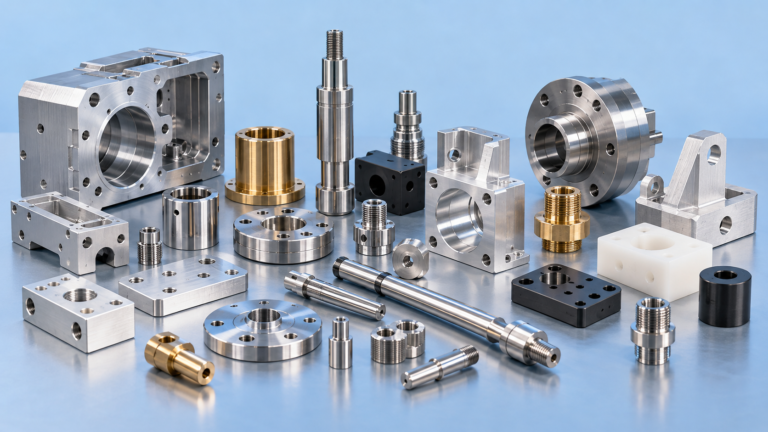
When your CNC machining supplier repeatedly misses delivery dates, the problem goes far beyond late components. Production schedules become unstable, purchasing departments spend more time chasing orders, and your company risks missing commitments to its own customers.
For European OEM manufacturers, reliable delivery of precision machined parts is essential. A single delayed batch of shafts, housings, brackets, or other critical components can disrupt assembly lines, delay equipment deliveries, and create unexpected procurement costs.
Yet many purchasing managers continue working with unreliable CNC suppliers because switching manufacturers seems complicated. They worry about production transfers, quality inconsistencies, new tooling costs, and the time required to qualify an alternative.
The reality is that continuing with an unreliable supplier can be more expensive than qualifying a new one.
The key is not simply finding another CNC machine shop. It is identifying a manufacturing partner capable of meeting your technical requirements, providing realistic lead times, maintaining consistent quality, and supporting your future production needs.
This guide explains how to recognize serious supplier reliability problems, evaluate alternative CNC machining suppliers in Europe, and transfer production with minimal disruption.
Already experiencing delivery problems? MegaMETA provides CNC turning and milling services through its qualified manufacturing partner network in Lithuania. Send your drawings, quantities, and required delivery dates to receive a quotation for an alternative production solution.
1. Why CNC Machining Suppliers Miss Delivery Deadlines
Occasional manufacturing delays are unavoidable. Raw materials can arrive late, complex components may require additional machining operations, and unexpected quality issues can interrupt production.
However, repeated delivery failures often indicate deeper problems with a supplier’s capacity, planning, or manufacturing processes.
Understanding the underlying cause is important before deciding whether to continue the relationship or begin looking for an alternative CNC supplier.
Production Capacity Is Overloaded
One of the most common reasons for CNC machining delays is insufficient manufacturing capacity.
A supplier may accept more orders than its equipment and workforce can realistically handle. This frequently happens when machine shops take on large projects without adjusting their production schedules.
As a result, smaller or less profitable customers may experience increasing delays.
Typical warning signs include:
- Previously reliable delivery dates becoming unpredictable.
- Lead times increasing with each new purchase order.
- Production repeatedly starting later than originally agreed.
- The supplier being unable to confirm a specific machining slot.
- Urgent orders receiving priority over existing commitments.
For purchasing managers, the key question is whether the supplier is experiencing a temporary capacity shortage or a structural planning problem.
A temporary delay may be manageable. Recurring capacity problems often justify qualifying an additional CNC manufacturer.
Poor Production Planning
Even a machine shop with modern equipment can struggle with deliveries if production planning is ineffective.
CNC manufacturing requires coordination between material procurement, programming, machine setup, machining operations, inspection, finishing, and shipping.
When these activities are not properly scheduled, production delays accumulate.
For example, a supplier may promise a three-week delivery without confirming whether the required steel is available or whether the necessary machining equipment will be free.
The issue becomes visible only when the purchasing manager asks for an update shortly before the scheduled delivery.
A reliable CNC supplier should be able to explain the status of an order and provide credible production milestones—not simply promise that the components will ship soon.
Unexpected Quality Problems
Tight tolerances, complex geometries, and demanding surface finishes can increase the risk of manufacturing nonconformities.
If components fail inspection, additional machining, rework, or complete replacement may be necessary.
Quality problems become especially damaging when they are discovered at the end of the production process.
This is why machining capability and quality control should be assessed together when evaluating alternative suppliers.
Dependence on External Processes
A machined component may require several operations before it is ready for assembly.
These can include:
- CNC milling and turning.
- Heat treatment.
- Precision grinding.
- Anodizing or zinc plating.
- Surface finishing.
- Dimensional inspection.
A supplier may perform the machining operations itself while relying on external subcontractors for finishing or treatment.
Without proper coordination, these operations can introduce additional delivery risks.
For components requiring multiple manufacturing stages, working with a partner that coordinates the complete process can simplify procurement and reduce the number of separate deliveries buyers must manage.
2. When Should You Start Looking for an Alternative CNC Supplier?
Not every delayed order requires an immediate supplier change.
However, certain patterns indicate that the reliability of your supply chain may be deteriorating.
The most important factor is not the number of delays alone, but their frequency, predictability, and effect on your operations.
Five Warning Signs You Should Not Ignore
1. Delivery dates change repeatedly.
Your supplier confirms a delivery date, postpones it, and then changes it again without providing a credible recovery plan.
2. You must constantly request production updates.
Instead of receiving proactive communication, your purchasing department must repeatedly contact the supplier to find out whether components are being manufactured.
3. Urgent orders are no longer manageable.
Even relatively straightforward components cannot be produced within a reasonable period because the supplier lacks available capacity.
4. Quality problems are becoming more frequent.
Late deliveries are accompanied by rejected parts, missing inspection reports, or inconsistent manufacturing quality.
5. The supplier cannot support growing demand.
Your company is increasing production volumes, but the existing CNC supplier cannot provide the additional capacity required.
When several of these problems occur together, continuing to depend entirely on one supplier increases operational risk.
Evaluate Your Supplier Using Actual Delivery Performance
Rather than relying on impressions, review your supplier’s recent delivery history.
For each purchase order, compare the originally confirmed delivery date against the actual delivery date.
Consider these indicators:
| Supplier performance indicator | What purchasing managers should evaluate |
|---|---|
| On-time delivery | Percentage of orders received by the agreed date |
| Delivery deviations | How often promised dates change |
| Average delay | Typical number of days late |
| Communication | Whether problems are communicated before deadlines |
| Quality performance | Rejected parts, rework, and inspection failures |
| Recovery capability | Ability to provide realistic corrective actions |
A consistently low on-time delivery rate is a strong reason to initiate supplier development or alternative sourcing.
The decision becomes particularly urgent when delayed components are critical to assembly or customer deliveries.
If your current CNC manufacturer is creating repeated disruptions, you do not necessarily need to terminate the relationship immediately. Qualifying an alternative supplier gives your company more flexibility and reduces dependence on a single production source.
3. The Real Cost of an Unreliable CNC Machining Supplier
Purchasing departments often compare CNC suppliers primarily by the quoted price per component.
However, the lowest machining price does not always produce the lowest total procurement cost.
Late deliveries introduce indirect costs that may significantly exceed the original price difference between suppliers.
Production Downtime
Imagine an equipment manufacturer waiting for 60 precision machined shafts.
The shafts are essential for completing several industrial assemblies, but the supplier misses the agreed delivery date by two weeks.
Although the components represent only a small percentage of the equipment’s total value, their absence prevents the finished machines from being completed.
The purchasing department must now coordinate with production planners, warehouse personnel, project managers, and the supplier.
If the customer’s delivery date is affected, the delay may also create contractual or commercial consequences.
Emergency Manufacturing Costs
When critical parts are delayed, companies sometimes need to arrange urgent replacement production.
Emergency machining may involve:
- Expedited programming and setup.
- Overtime or additional machine shifts.
- Small-batch manufacturing at higher unit prices.
- Express shipping.
- Additional inspection and coordination.
These expenses can eliminate the savings initially achieved by choosing the cheaper supplier.
Increased Inventory Requirements
Some companies compensate for unreliable deliveries by maintaining larger safety stocks.
While additional inventory may protect production, it also ties up working capital and increases storage requirements.
A reliable manufacturing partner helps purchasing managers establish more predictable replenishment schedules.
Internal Administrative Costs
Every delayed order creates additional purchasing work.
Supplier reminders, revised schedules, meetings, emergency freight arrangements, and production planning adjustments all consume time.
These costs rarely appear in the purchase price of a CNC machined component, but they affect procurement efficiency.
Example: Comparing Unit Price and Total Cost
Consider a hypothetical annual requirement for 1,000 machined components.
| Cost element | Supplier A | Supplier B |
|---|---|---|
| Unit price | €42 | €45 |
| Annual component cost | €42,000 | €45,000 |
| Emergency freight and coordination | €2,000 | €300 |
| Production disruption costs | €6,000 | €0 |
| Total estimated annual cost | €50,000 | €45,300 |
Illustrative scenario only; actual costs depend on order history and operating conditions.
Although Supplier B charges a higher unit price, its lower disruption costs result in a lower estimated annual procurement cost.
The correct sourcing decision should consider delivery reliability, quality, and total cost—not the machining price alone.
4. How to Find a Reliable Alternative CNC Machining Supplier in Europe
Finding another CNC machining company is relatively straightforward.
Finding one that can consistently produce your specific components, maintain the required tolerances, and deliver according to your production schedule requires a more structured evaluation.
Before sending an RFQ, purchasing managers should verify several essential capabilities.
Confirm the Supplier Can Manufacture Your Components
Not every CNC machine shop is suitable for every project.
A company specializing in small aluminium components may not have the equipment required for large steel shafts or complex multi-axis machining.
Evaluate the following:
Manufacturing processes
Does the supplier offer the processes your drawings require?
These may include CNC turning, 3-axis milling, 4-axis machining, 5-axis machining, or precision grinding.
Component dimensions
Confirm the maximum workpiece size, turning diameter, machining length, and equipment limitations relevant to your parts.
Materials
Check experience with the specified material grades, such as:
- C45 and 42CrMo4 alloy steel.
- S235 and S355 structural steel.
- Stainless steel 304 and 316L.
- Aluminium alloys.
- Brass and copper alloys.
- Titanium.
- Engineering plastics.
Production quantities
A suitable supplier must be able to handle your expected batch sizes.
A company optimized for prototypes may not be commercially competitive for recurring orders of several thousand components.
Similarly, a high-volume manufacturing operation may not be sufficiently flexible for small-batch production.
Request Evidence of Quality Control
Statements such as “high precision” or “excellent quality” are not enough to qualify a supplier.
Ask how critical dimensions are inspected and documented.
Depending on the part, relevant controls may include CMM inspection, calibrated measuring equipment, material traceability, first-article inspection, and documented production checks.
If your company requires material certificates or specific inspection reports, include these requirements in the RFQ.
A supplier should confirm whether it can provide the requested documentation before the purchase order is issued.
Evaluate Production Capacity
Available machining capability does not automatically mean available production capacity.
A CNC supplier may own suitable equipment but have no realistic opportunity to manufacture your components before the required deadline.
Ask specific questions:
- When can production begin?
- Is the required material available?
- Are any external treatments necessary?
- What quantity can be delivered in the first batch?
- Can repeat orders be scheduled?
- What happens if production demand increases?
For urgent projects, it may be more practical to arrange partial deliveries rather than wait for the complete order.
Assess Communication Before Ordering
The quotation process itself reveals valuable information about supplier reliability.
A technically capable CNC supplier should be able to identify unclear drawings, discuss material requirements, explain manufacturing constraints, and provide reasonable delivery estimates.
Warning signs include vague responses, incomplete quotations, and promises that seem unrealistic given the complexity of the work.
A supplier that communicates clearly before receiving an order is generally easier to evaluate and coordinate during production.
5. How to Switch CNC Suppliers Without Disrupting Production
Changing manufacturers can create risks if the transfer is poorly planned.
Different machine configurations, tooling strategies, fixtures, inspection methods, and production experience can affect the consistency of finished components.
For that reason, purchasing managers should avoid transferring all production immediately unless the situation requires emergency action.
A controlled transition is usually more effective.
Step 1: Select Suitable Components for Initial Qualification
Begin with components that are representative of your requirements but manageable for an initial order.
Good candidates often include:
- Repeat-order CNC turned parts.
- Milled steel or aluminium brackets.
- Shafts and bushings.
- Precision-machined housings.
- Components with clearly documented tolerances.
Avoid using the most complex or production-critical component as the first qualification project unless there is a compelling reason.
The goal is to verify the new supplier’s actual capabilities before committing substantial production volume.
Step 2: Prepare a Complete Technical RFQ
Incomplete quotation requests create unnecessary delays and make supplier comparisons difficult.
Provide the information needed to evaluate manufacturability, production cost, and delivery time.
A well-prepared CNC machining RFQ should include:
| RFQ information | Why it matters |
|---|---|
| Technical drawing | Defines dimensions, tolerances, and requirements |
| 3D model | Supports programming and manufacturability evaluation |
| Material specification | Determines procurement and machining requirements |
| Quantity | Affects setup cost and manufacturing strategy |
| Annual forecast | Helps evaluate recurring production |
| Surface treatment | Identifies secondary operations |
| Inspection requirements | Defines quality documentation and controls |
| Required delivery date | Allows realistic capacity planning |
| Delivery destination | Supports transport and logistics planning |
| Packaging requirements | Protects components and supports receiving |
If drawings contain proprietary information, establish an appropriate confidentiality agreement before transferring technical data.
Need an alternative CNC machining quotation? MegaMETA can review technical drawings, manufacturing requirements, and expected quantities to evaluate a suitable production route.
Step 3: Compare Quotations Beyond Unit Price
Once quotations are received, compare suppliers using consistent criteria.
Consider the following:
| Evaluation factor | Questions to ask |
|---|---|
| Price | Does the quotation include all required operations? |
| Lead time | Is the delivery date realistic and clearly defined? |
| Material | Is the exact specified grade included? |
| Quality | Are inspection and documentation requirements covered? |
| Capacity | Can the supplier support repeat orders? |
| Logistics | Are delivery terms and transport responsibilities clear? |
| Risk | How will delays or nonconforming parts be handled? |
Be cautious when a quotation is significantly cheaper than competing offers without a clear explanation.
The difference may result from material substitutions, excluded finishing operations, different inspection assumptions, or an incomplete understanding of the requirements.
Step 4: Place a Trial Order
A trial order helps validate the supplier before transferring regular production.
Depending on component complexity and commercial importance, qualification may involve a small pilot batch or a representative sample.
Evaluate:
- Dimensional conformity.
- Surface finish.
- Material documentation.
- Manufacturing consistency.
- Packaging and delivery condition.
- Communication during production.
- Actual delivery performance.
For critical parts, require inspection evidence and formal approval before releasing components into production.
Step 5: Introduce Production Gradually
Once the initial order meets the agreed requirements, begin allocating recurring demand to the new supplier.
Where practical, retain the original manufacturer during the transition.
A gradual approach reduces the risk of replacing one supply problem with another.
Over time, purchasing managers can adjust order allocation based on actual quality, delivery performance, cost, and capacity.
6. Should You Replace Your CNC Supplier or Add a Second One?
Many manufacturers assume that finding an alternative supplier means terminating the existing relationship.
In practice, dual sourcing can be a more effective long-term solution.
Instead of depending entirely on one machine shop, purchasing managers qualify two production sources capable of manufacturing the same components.
This allows purchasing departments to distribute demand according to capacity, performance, and commercial requirements.
Benefits of Having a Second CNC Supplier
Reduced dependence on one manufacturer
If one supplier experiences equipment breakdowns, capacity shortages, or other disruptions, another qualified source may be able to support production.
Improved flexibility
Additional manufacturing capacity becomes useful when order volumes increase unexpectedly.
Commercial benchmarking
Multiple qualified suppliers make it easier to compare quotations, manufacturing methods, and delivery performance.
Better supply chain continuity
A second source can help reduce the consequences of disruption at a primary supplier, provided that tooling, material, and production qualification requirements have been addressed.
When Dual Sourcing May Not Be Appropriate
Not every component benefits from two suppliers.
Very low-volume parts, components requiring expensive dedicated tooling, and tightly controlled manufacturing processes may involve significant duplication costs.
In these situations, a qualified backup supplier with a pre-agreed production transfer procedure may be more economical than continuously dividing orders.
The correct approach depends on component criticality, annual demand, qualification effort, and the cost of potential supply interruptions.
7. Why European CNC Machining Suppliers Are Worth Considering
For European OEMs, geographical proximity can simplify the coordination of CNC machining projects.
When suppliers are located within Europe, purchasing teams may benefit from shorter transport routes, simpler communication, and easier coordination of urgent deliveries.
This can be particularly valuable for companies operating in Germany, Sweden, Denmark, Finland, Norway, the Netherlands, and other European industrial markets.
Shorter and More Flexible Logistics
Machined components are often required according to specific production schedules.
Working with a supplier in Europe may provide more practical options for arranging partial shipments, coordinating transport, and responding to urgent requirements.
Actual delivery time still depends on production capacity, location, transport mode, and the complexity of the components.
Easier Technical Communication
Successful CNC machining projects often require clarification of drawings, tolerances, material grades, and surface treatment specifications.
Clear communication between buyers, engineers, and the manufacturing coordinator helps prevent avoidable errors.
When production issues arise, prompt technical discussion can be just as important as machining capability.
Access to Multiple Manufacturing Technologies
Industrial components sometimes require more than one manufacturing process.
For example, a steel component may require initial material preparation, CNC turning, milling, heat treatment, and grinding.
A company coordinating these operations can reduce the administrative burden of sourcing each process separately.
For more complex requirements, MegaMETA combines CNC machining services with access to related manufacturing operations through its production partner network.
8. How MegaMETA Can Support Your Alternative CNC Sourcing Strategy
When a CNC supplier becomes unreliable, the immediate priority is usually straightforward: find qualified production capacity without compromising component quality or creating further delays.
MegaMETA supports European industrial customers by coordinating precision manufacturing through a network of qualified production partners based in Lithuania.
Rather than relying on a single machining process or workshop, the company evaluates project requirements and coordinates appropriate manufacturing resources.
CNC Milling and Turning
MegaMETA offers CNC turning and milling services for precision components manufactured from technical drawings and 3D models.
Available production capabilities include 3-axis, 4-axis, and 5-axis CNC milling, as well as CNC turning for components of different sizes and complexity.
Projects may include individual components, prototypes, small batches, and recurring production orders.
Material and Technical Requirements
Manufacturing options cover common engineering materials, including carbon steel, alloy steel, stainless steel, aluminium, brass, titanium, and engineering plastics.
Material specifications, dimensional tolerances, and inspection requirements are evaluated according to the individual project.
Manufacturing Coordination
Components requiring multiple production stages may benefit from coordinated procurement and manufacturing management.
By combining suitable machining capacity with quality control and project coordination, MegaMETA aims to simplify the process of sourcing precision components.
A Practical Alternative for Delayed CNC Orders
If your current supplier cannot meet your delivery schedule, MegaMETA can assess whether an alternative production solution is feasible.
To begin, provide:
- Your technical drawings or 3D models.
- Material specifications.
- Required quantities.
- Requested delivery dates.
- Inspection and certification requirements.
- Delivery destination.
The team can then review technical feasibility, available production options, lead time, and pricing.
Looking for a reliable alternative CNC machining supplier in Europe?
Send your current requirements to MegaMETA and request a quotation before your supplier’s next delay affects production.
Request an Alternative CNC Machining Quote
Email: contact@megameta.lt
9. How to Prevent Future CNC Supply Chain Disruptions
Qualifying an alternative supplier is an important first step, but long-term reliability also depends on maintaining a structured sourcing strategy.
Purchasing managers can reduce future disruptions by implementing a few practical measures.
Track Supplier Performance Consistently
Monitor on-time delivery, quality performance, order acknowledgment, and recurring production issues.
Review performance regularly instead of waiting until a critical order becomes late.
Share Production Forecasts
Even an approximate rolling forecast can help manufacturing partners plan capacity and material procurement.
Suppliers are generally better positioned to support recurring demand when purchasing requirements are communicated in advance.
Identify Critical Components
Not every delayed component has the same operational impact.
Prioritize parts that can stop an assembly line, delay customer equipment deliveries, or require lengthy requalification.
These are often the best candidates for alternative supplier qualification and contingency planning.
Maintain Updated Technical Documentation
Outdated drawings, missing CAD models, and unclear revision histories make emergency sourcing more difficult.
Keep controlled technical documentation available so approved information can be transferred efficiently to qualified suppliers.
Review Manufacturing Risks Before Renewing Contracts
Before committing substantial demand to a supplier, consider equipment limitations, production capacity, previous delivery performance, and dependence on external operations.
Addressing these issues early is usually easier than resolving them during an active production disruption.
10. Frequently Asked Questions About Switching CNC Suppliers
How quickly can I find an alternative CNC machining supplier?
The time required depends on the complexity of the component, material availability, manufacturing capacity, and qualification requirements.
Simple parts with complete drawings may be easier to quote and transfer, while critical precision components can require additional sampling, inspection, and customer approval.
For urgent requirements, clearly state the delivery deadline in your RFQ and ask whether partial production is possible.
Can a new CNC supplier manufacture parts using my existing drawings?
In many cases, yes.
A qualified supplier can assess technical drawings and CAD models to determine whether the component is suitable for its equipment and manufacturing processes.
However, drawing availability alone does not guarantee interchangeability. Critical tolerances, material conditions, finishing requirements, and inspection methods must also be verified.
Do I need to change suppliers completely if deliveries are repeatedly late?
Not necessarily.
You may choose to qualify an additional supplier while continuing to work with your current manufacturer.
This strategy can increase sourcing flexibility without requiring an immediate complete production transfer.
How do I compare CNC machining quotations from different suppliers?
Compare the complete manufacturing scope rather than unit price alone.
Check material grades, quantities, tolerances, inspection requirements, finishing operations, lead times, packaging, and delivery terms.
Make sure each supplier has quoted against the same drawing revision and commercial assumptions.
Can MegaMETA handle both CNC milling and CNC turning?
Yes. MegaMETA coordinates CNC milling and turning through its manufacturing partner network, supporting projects involving precision components, multiple material grades, and different production quantities.
You can review the available CNC machining services or submit technical documentation for a quotation.
What information should I send to receive a CNC machining quotation?
For the most accurate evaluation, provide a technical drawing, preferably accompanied by a 3D CAD model, material specification, quantity, required delivery date, surface treatment requirements, and applicable inspection documentation.
Annual demand estimates are also helpful for recurring production.
Is it possible to transfer an urgent CNC order to another supplier?
It may be possible, depending on available capacity, component complexity, materials, and qualification requirements.
Before placing an urgent order, verify whether the proposed supplier can manufacture the part and meet the required delivery date.
For production-critical components, do not bypass necessary quality approval simply to accelerate delivery.
Conclusion: Don’t Let Unreliable CNC Deliveries Control Your Production Schedule
Repeated CNC machining delays are not simply an inconvenience for purchasing departments. They can affect production planning, inventory management, customer commitments, and overall manufacturing costs.
When a supplier repeatedly fails to meet confirmed deadlines, continuing to depend on the same source creates unnecessary operational risk.
A carefully qualified alternative CNC supplier can provide additional manufacturing capacity, improve sourcing flexibility, and support more predictable production planning.
The most effective approach is to begin evaluating alternatives before the next urgent delivery failure.
By reviewing manufacturing capability, quality systems, available capacity, communication, and total procurement cost, purchasing managers can make better sourcing decisions.
If you are currently experiencing CNC machining delays, MegaMETA is ready to evaluate your project requirements.
Whether you need a replacement supplier for recurring machined components, additional production capacity, or a quotation for an upcoming order, our team can review your drawings and assess suitable manufacturing options.
Send your CNC drawings, material specifications, quantities, and required delivery dates to receive a tailored quotation.
REQUEST YOUR CNC MACHINING QUOTE
MegaMETA — Precision CNC Machining and Manufacturing Coordination in Lithuania.